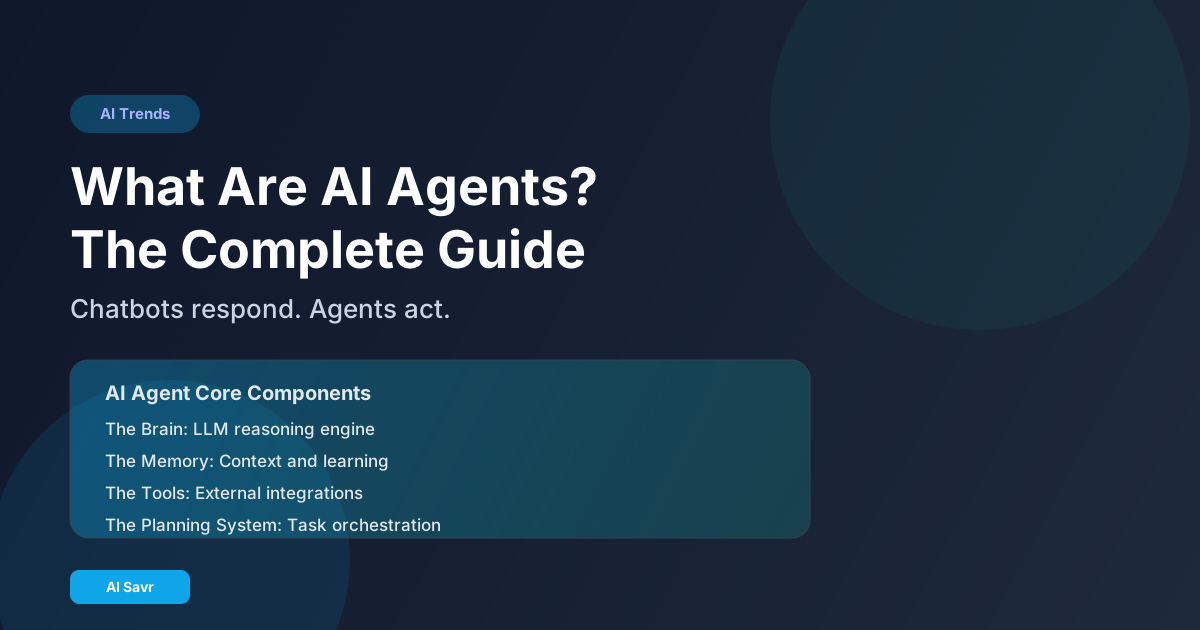
2025 was the year of chatbots. 2026 is the year of agents. If you have not been following the AI agent revolution, you are about to find yourself using software that is fundamentally different from anything you have used before. Not better chatbots. Entirely new category.
This guide explains what AI agents are, how they work, why they matter, and what it means for your work, your business, and your daily life.
AI Agent vs AI Chatbot: The Core Difference
A chatbot responds to your message. An agent completes your task.
When you tell ChatGPT "help me plan a trip to Tokyo," it gives you a list of suggestions. When you tell an AI agent the same thing, it checks your calendar for available dates, searches flights, compares hotel prices, reads reviews, books the best options, and sends you the itinerary.
Chatbot: Takes your input, generates output. You do the work. Agent: Takes your goal, makes a plan, executes the steps. It does the work.
The technical difference is autonomy and tool use. Agents can:
- Plan multi-step approaches to reach a goal
- Use tools like web browsers, APIs, databases, and file systems
- Make decisions about which steps to take next
- Execute actions in the real world (send emails, write code, book flights)
- Self-correct when something goes wrong
How AI Agents Work Under the Hood
Every AI agent has four core components:
1. The Brain (Large Language Model)
The LLM provides reasoning, language understanding, and decision-making. Models like GPT-5, Claude 4, and DeepSeek serve as the cognitive engine. The better the model, the better the agent.
2. The Memory
Agents store conversation history, user preferences, and task context. This lets them maintain continuity across sessions and learn your patterns over time.
3. The Tools
Agents connect to external tools and APIs: web browsers, code execution environments, databases, email services, calendar apps, and more. Tools are what transform a chatbot into an agent.
4. The Planning System
When you give an agent a complex goal, it breaks it down into subtasks, decides the order, assigns tools to each step, and manages the execution. This planning loop is what makes agents feel "intelligent."
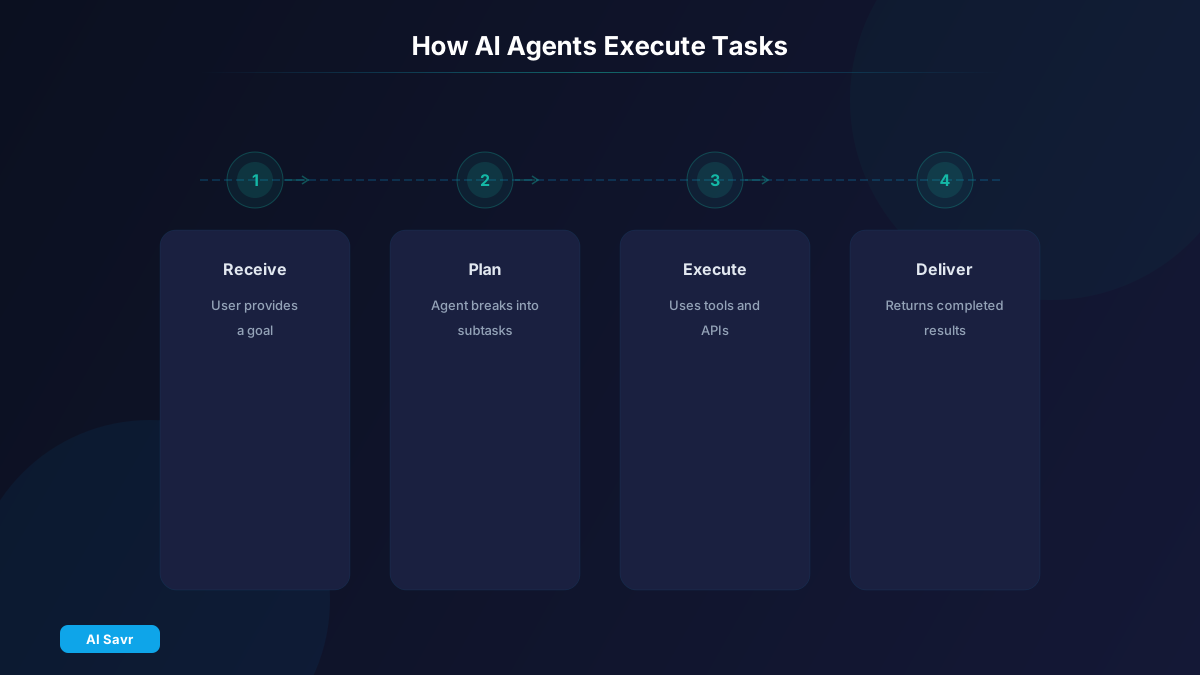
Types of AI Agents in 2026
Coding Agents
These write, debug, test, and deploy code. Examples include Claude Code, Devin AI, GitHub Copilot Workspace, and Cursor Pro. They can handle everything from fixing a bug to building entire features.
Personal Agents
Handle everyday tasks like email management, scheduling, shopping, and travel planning. OpenClaw and Perplexity Assistant are leading examples.
Business Agents
Automate business processes: lead generation, customer support, reporting, and CRM management. Salesforce Agentforce, Notion AI Agents, and Zapier Central fall in this category.
Research Agents
Conduct deep research across multiple sources, synthesize findings, and produce cited reports. Manus AI, Perplexity Deep Research, and Google Gemini Deep Research excel here.
Creative Agents
Generate content, design assets, and multimedia. They go beyond simple generation to handle entire creative workflows from concept to finished product.
Why 2026 Is the Year of Agents
Three breakthroughs converged to make agents practical:
Better Models
GPT-5 and Claude 4 have the reasoning capability to handle complex, multi-step tasks reliably. Previous models made too many errors in planning and execution.
Tool Integration Standards
The Model Context Protocol (MCP) created a universal standard for connecting AI models to external tools. Before MCP, every tool needed custom integration. Now there is a plug-and-play standard.
Infrastructure Maturity
Cloud platforms, API ecosystems, and deployment tools have matured to the point where running AI agents at scale is economically viable.
Real-World Use Cases
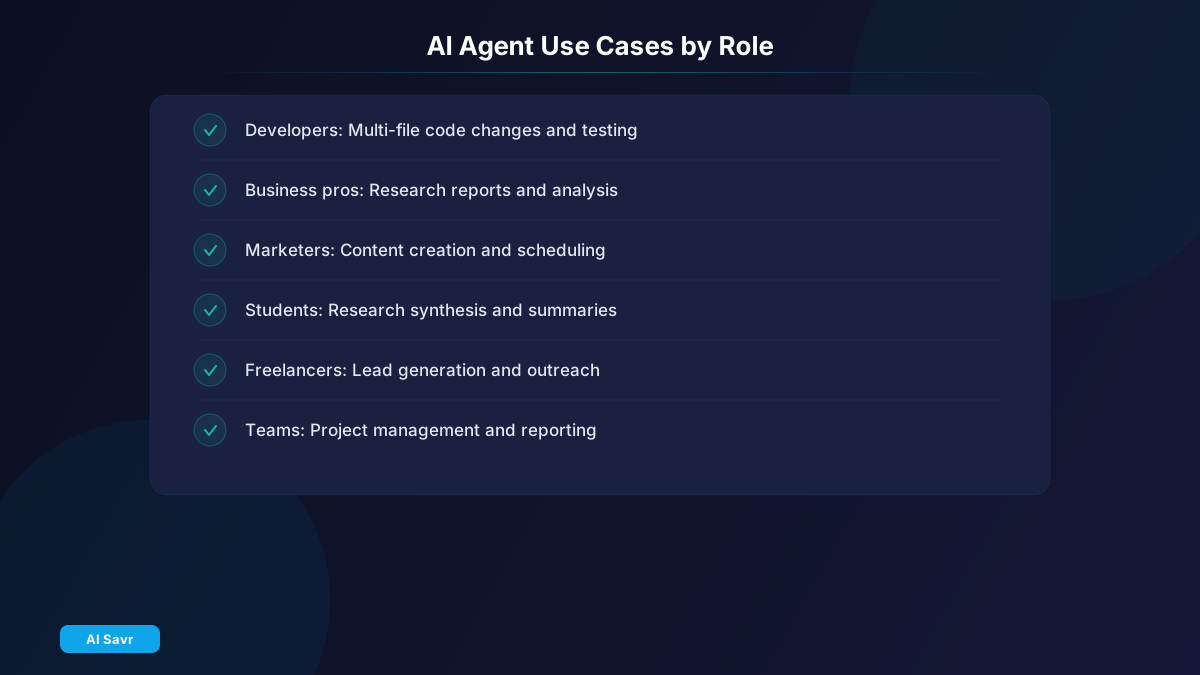
For Developers
- Claude Code reads your codebase and makes multi-file changes
- Devin AI handles entire feature development autonomously
- GitHub Copilot Workspace turns issues into pull requests
For Business Professionals
- Salesforce Agentforce handles customer service inquiries end to end
- Notion AI Agents maintain project databases and generate status reports
- Zapier Central connects 7,000+ apps with AI-powered logic
For Everyday Users
- Perplexity Assistant books flights, fills out forms, and manages subscriptions
- OpenClaw manages your digital life through messaging platforms
- Google Gemini assists with research, planning, and content creation
For Researchers
- Perplexity Deep Research produces 30-page cited reports autonomously
- Manus AI handles market research, competitive analysis, and data gathering
- Elicit analyzes academic papers and extracts structured findings
The Risks and Limitations
Hallucination and Errors
Agents can confidently execute wrong plans. A travel agent that books the wrong flight is worse than a chatbot that suggests the wrong flight, because the agent already spent your money.
Security Concerns
Agents need access to your tools, data, and accounts. A compromised agent can send emails on your behalf, modify your code, or access sensitive information. OpenClaw's security incidents demonstrated this risk clearly.
Cost
Agent actions use significantly more compute than simple chat. Each step in a plan requires an LLM call, tool execution, and result processing. Monthly costs can add up quickly.
Over-Reliance
The convenience of agents can lead to blind trust. Always review critical outputs, especially for financial decisions, legal documents, and production code.
How to Get Started with AI Agents
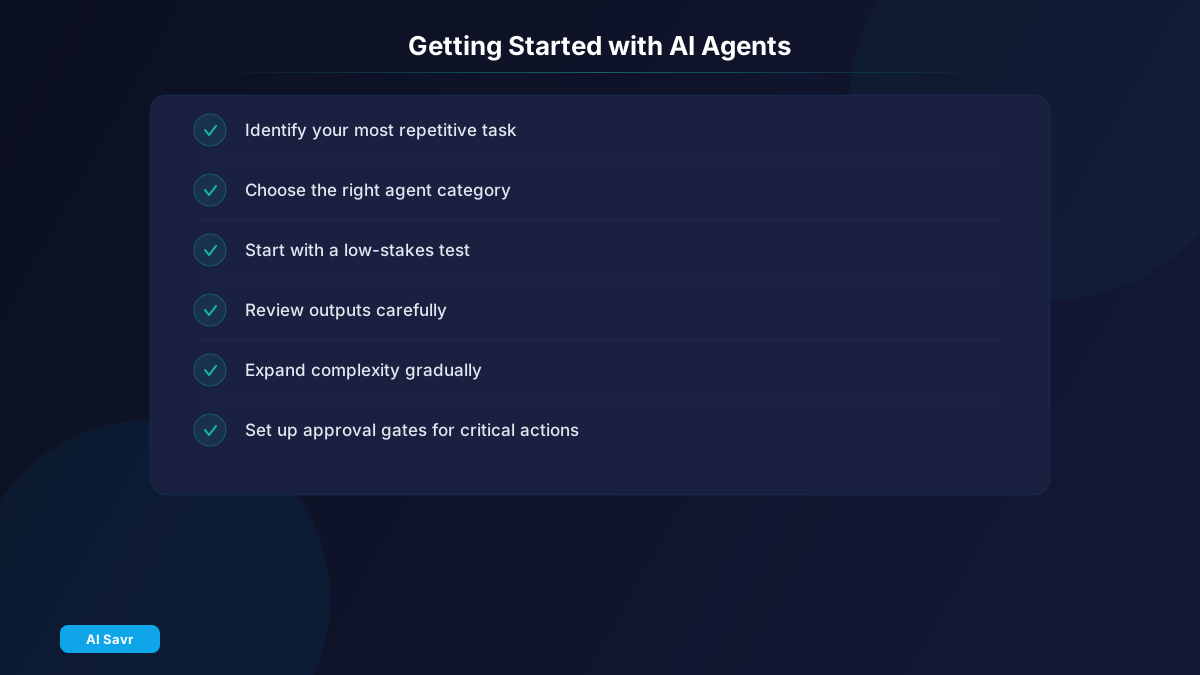
- Identify your most repetitive task. What do you spend the most time on that follows a predictable pattern?
- Choose the right agent category. Coding work goes to coding agents. Research goes to research agents. Do not use a general agent for specialized tasks.
- Start small. Give the agent a low-stakes version of your task. Review the output carefully.
- Expand gradually. Add complexity as you build confidence in the agent's reliability.
- Set up guardrails. Use approval steps for high-stakes actions. Review before the agent sends, books, or deploys anything.
The Bottom Line
AI agents are the most significant shift in how we use AI since ChatGPT launched in 2022. The change from "AI that responds" to "AI that acts" will transform workflows across every industry. The technology is ready, the tools are available, and early adopters are already saving hours every week.
Start with one agent, one task, and one clear goal. The results will speak for themselves.
Browse our complete AI tools directory to find the right agent for your workflow.