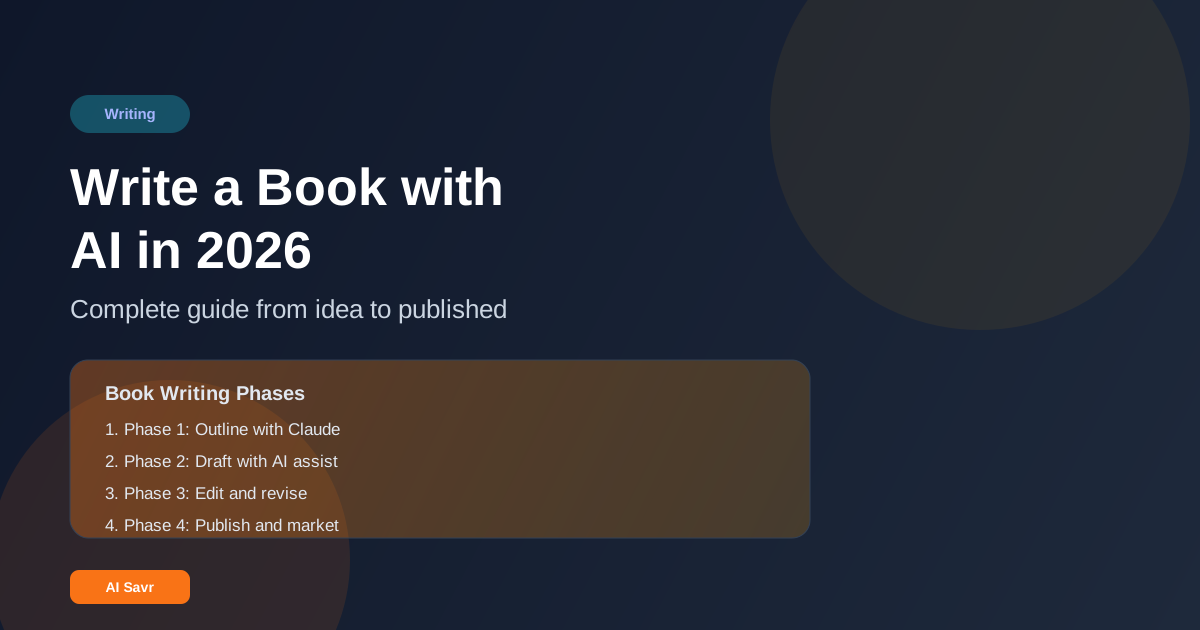
You have a book inside you. AI will not write it for you, but it will make the process significantly faster and less intimidating.

Whether you are writing fiction or non-fiction, here is a practical step-by-step process using AI tools.
Phase 1: Planning and Outlining
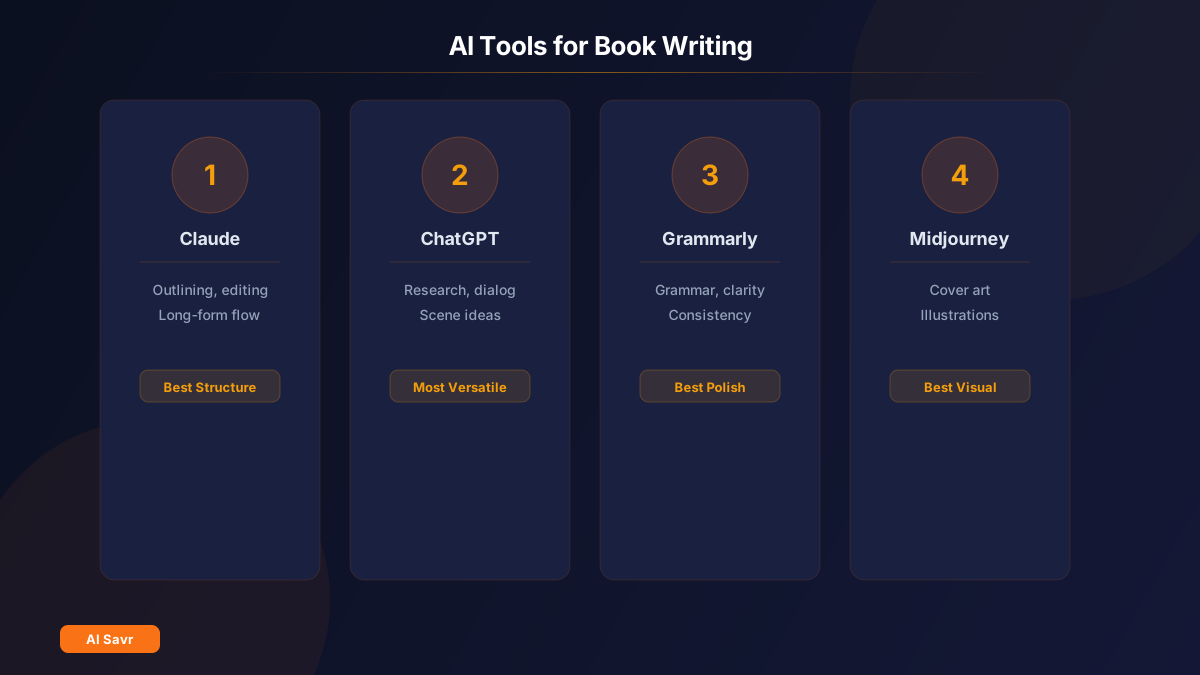
Start with Claude for outlining. It handles long-form structure better than any other AI:
Non-Fiction Outline Prompt: "I want to write a book about [topic] for [audience]. Create a detailed chapter outline with 12 chapters. Each chapter should have 3 to 5 key sections. Include an introduction and conclusion."
Fiction Outline Prompt: "Help me outline a [genre] novel. I want [number] chapters. My main character is [description]. The central conflict is [description]. Create a chapter-by-chapter outline with key plot points."
ChatGPT is great for brainstorming specific scenes, character backgrounds, and dialogue ideas.
Phase 2: Writing the First Draft
Here is where most people go wrong: they try to get the AI to write the entire book. Do not do that.
What works:
- Write each chapter yourself using the outline as a guide
- Use ChatGPT to overcome blank-page paralysis: "Write the opening paragraph of a chapter about [topic] in a [tone] style"
- Use AI to expand thin sections: "I wrote this draft paragraph. Expand it with more detail and examples while keeping my voice"
- Use Claude for research: "What are the most important statistics about [topic] that would support my argument?"
What does not work:
- "Write chapter 3 of my book" with no context. The output will be generic and lifeless.
- Using AI output directly without editing. Readers can tell.
Target: 1,000 to 2,000 words per writing session. AI helps you reach that target faster.
Phase 3: Editing and Revision
This is where AI genuinely shines.
Grammarly catches grammar, clarity, and consistency issues across your entire manuscript.
Claude is excellent for developmental editing prompts:
- "Read this chapter. Does the argument flow logically? Point out any gaps or contradictions."
- "Review this dialogue. Does it sound natural? Suggest improvements."
- "Check this chapter for pacing issues. Where does it drag?"
ChatGPT for line editing:
- "Improve the clarity of these sentences without changing the meaning."
- "Find and fix any cliches in this passage."
Phase 4: Publishing
AI helps with the publishing process too:
Book Cover:
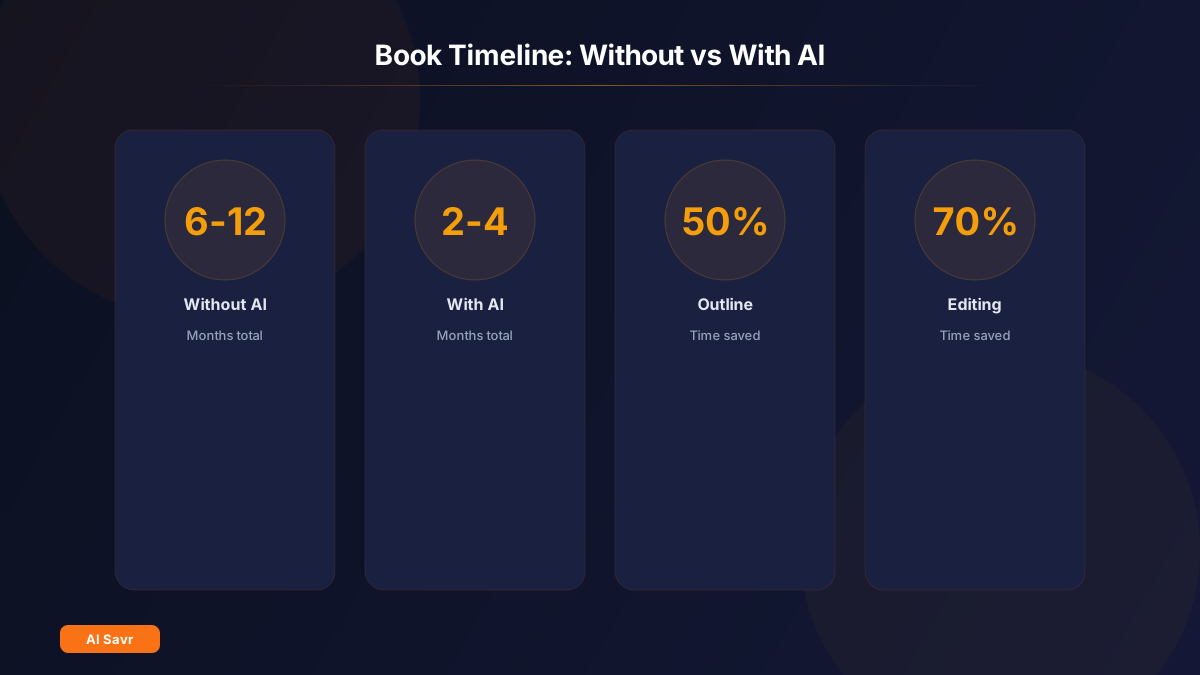
- Midjourney creates stunning cover imagery
- Canva AI designs the complete cover with spine and back
Book Description:
- ChatGPT writes compelling back-cover copy and Amazon descriptions
- Generate multiple versions and A/B test
Marketing:
- AI generates social media launch content
- Create email sequences for your launch list
- Generate blog posts and articles from your book content
Timeline: From Idea to Published
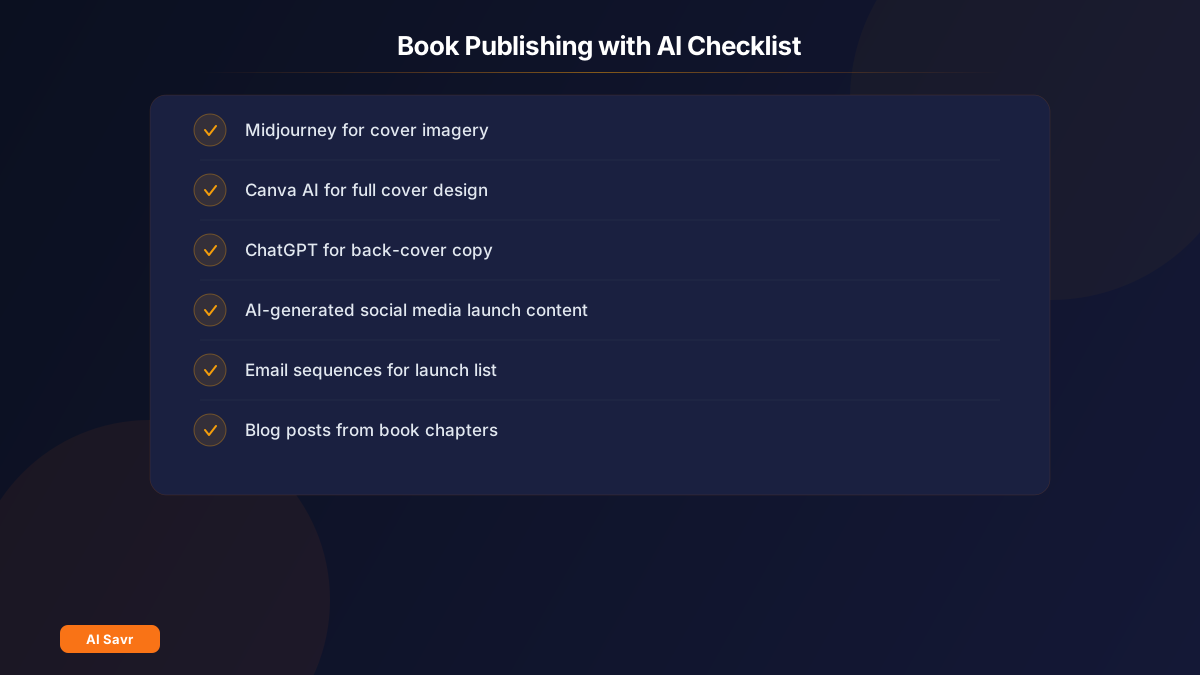
| Phase | Without AI | With AI |
|---|---|---|
| Outline | 2-4 weeks | 1-3 days |
| First Draft | 3-6 months | 1-3 months |
| Editing | 1-2 months | 2-4 weeks |
| Publishing Prep | 2-4 weeks | 1-2 weeks |
| Total | 6-12 months | 2-4 months |
Common Questions
Can I legally publish AI-assisted work? Yes. As long as you substantively authored and edited the content. AI is a tool like spell-check. The key is your creative direction and editing.
Will readers notice AI assistance? Not if you edit properly. Your voice, examples, and insights are what make a book worth reading. AI helps with structure and efficiency.
Which AI is best for fiction vs non-fiction?
- Fiction: Claude for plotting and character development, ChatGPT for dialogue
- Non-fiction: ChatGPT for research and structure, Claude for editing and flow
Related Resources
The Bottom Line
AI will not write your book for you, and you would not want it to. What it will do is make the process 50% to 70% faster by helping with structure, research, overcoming blocks, and editing. The book is still yours. AI just helps you get it out of your head and onto the page.