AI translation in 2026 is remarkably good. The gap between AI and human translation has narrowed dramatically, especially for business communication and content localization.
Here are the tools leading the space and when to use each one.
Top AI Translation Tools
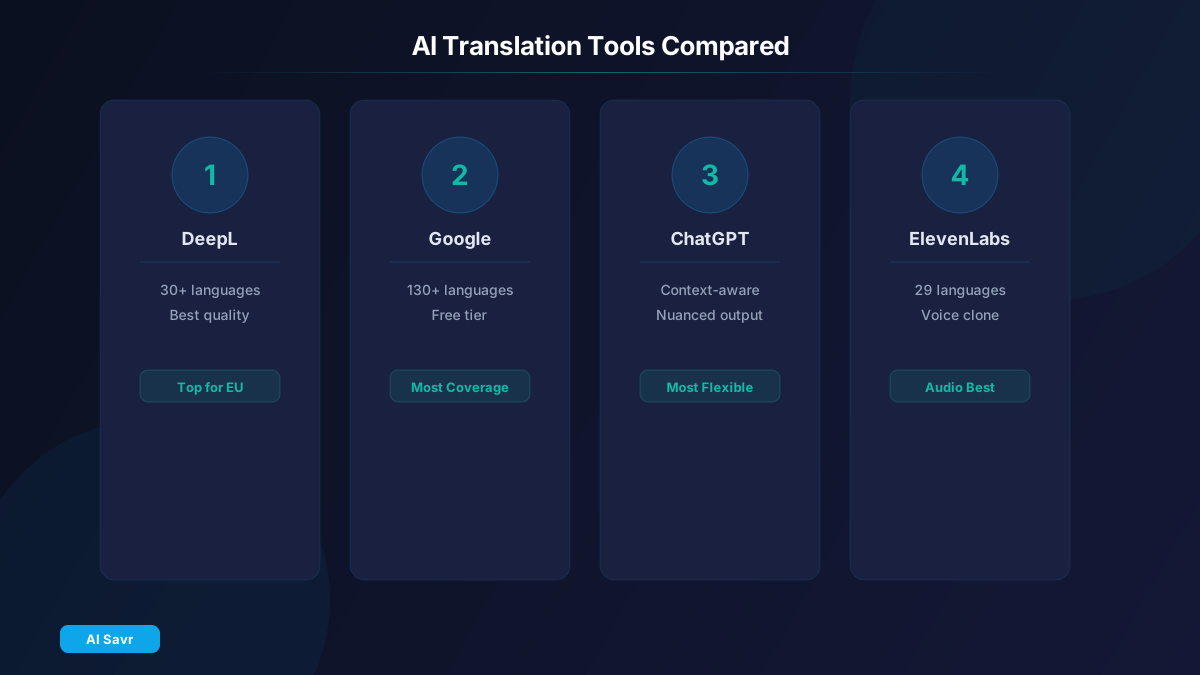
1. DeepL
DeepL consistently outperforms other translators in European languages. Its translations read naturally and capture nuance that other tools miss.
Best for: Business documents, marketing copy, formal communication Languages: 30+ languages Pricing: Free tier, Pro from $8.74/month Standout: Document translation preserving formatting (PDF, Word, PowerPoint)
2. Google Translate
Still the most accessible translator with the widest language coverage. The 2026 updates with Gemini integration have significantly improved quality.
Best for: Quick translations, rare languages, real-time conversation Languages: 130+ languages Pricing: Free (API pricing for developers)
3. ChatGPT and Claude for Translation
ChatGPT and Claude are surprisingly powerful translators because you can give context:
"Translate this marketing email from English to Japanese. The tone should be formal but warm. The audience is small business owners."
This context-aware translation produces dramatically better results than traditional translation tools.
Best for: Nuanced content, creative copy, context-specific translations
4. ElevenLabs for Audio Translation
ElevenLabs provides AI dubbing that translates and voices your audio content in 29 languages while preserving the original speaker's voice characteristics.
Best for: Video dubbing, podcast translation, audio content localization

Use Case Guide
Business Communication
- Best choice: DeepL Pro + Claude for review
- Why: DeepL handles the heavy lifting, Claude refines tone and context
- Cost: ~$30/month for high volume
Website and Content Localization
- Best choice: DeepL API + human review for key pages
- Why: Consistent quality at scale, humans catch cultural nuance
- Cost: API based, typically $5-50/month for most sites
Real-Time Conversation
- Best choice: Google Translate app with conversation mode
- Why: Widest language coverage, fastest real-time performance
- Cost: Free
Video and Audio Content
- Best choice: ElevenLabs for quality dubbing
- Why: Voice cloning preserves authenticity across languages
- Cost: From $5/month
Accuracy Comparison
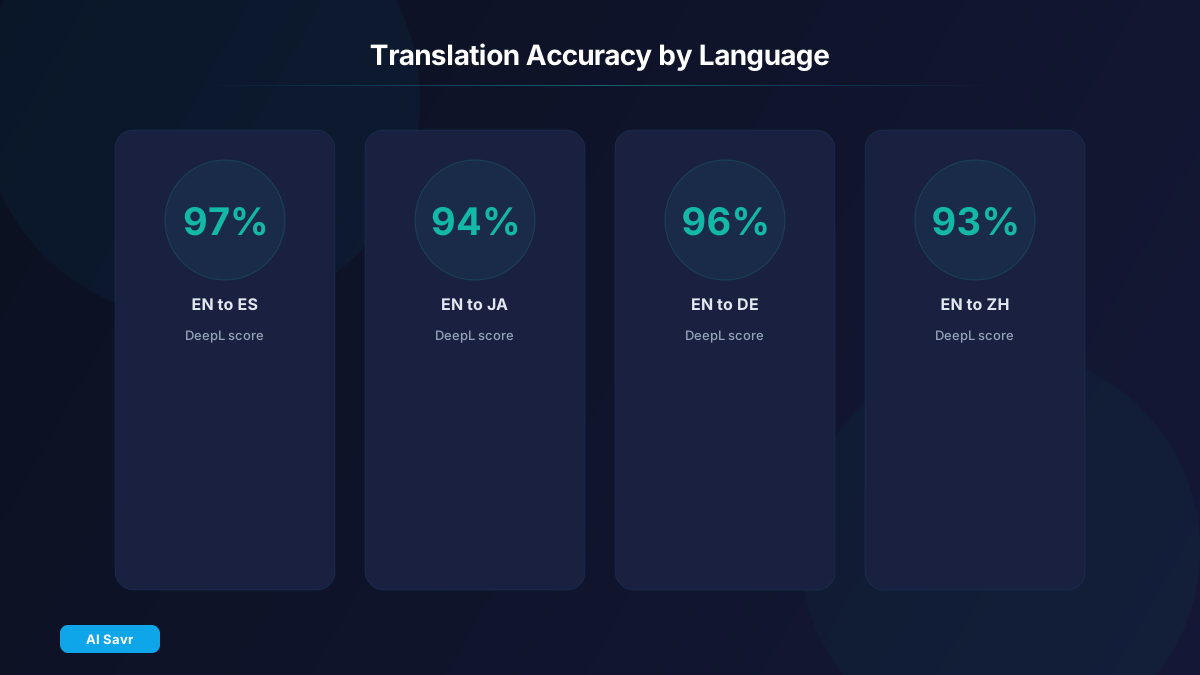
| Language Pair | DeepL | ChatGPT | |
|---|---|---|---|
| English to Spanish | Excellent | Very Good | Excellent |
| English to Japanese | Very Good | Good | Very Good |
| English to German | Excellent | Good | Very Good |
| English to Chinese | Very Good | Very Good | Very Good |
| English to Arabic | Good | Very Good | Good |
Tips for Better AI Translation
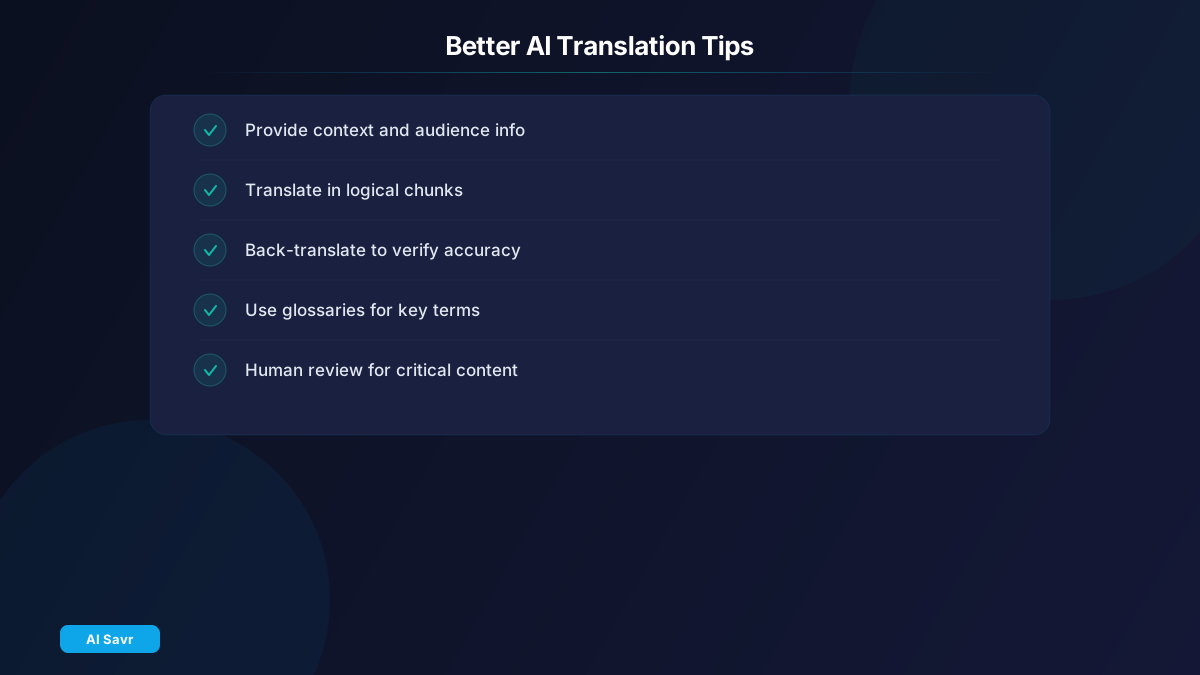
- Provide context: Tell the AI who the audience is and what tone to use
- Translate in chunks: Break long documents into logical sections
- Back-translate to verify: Translate back to your language to catch errors
- Use glossaries: Most tools let you define preferred translations for key terms
- Human review for critical content: Legal, medical, and marketing materials always need human eyes
Related Resources
The Bottom Line
AI translation in 2026 is good enough for most business communication. DeepL leads for European languages, Google Translate wins on coverage, and ChatGPT/Claude excel when you need context-aware, nuanced translations. For critical content, use AI as a first draft and add human review.