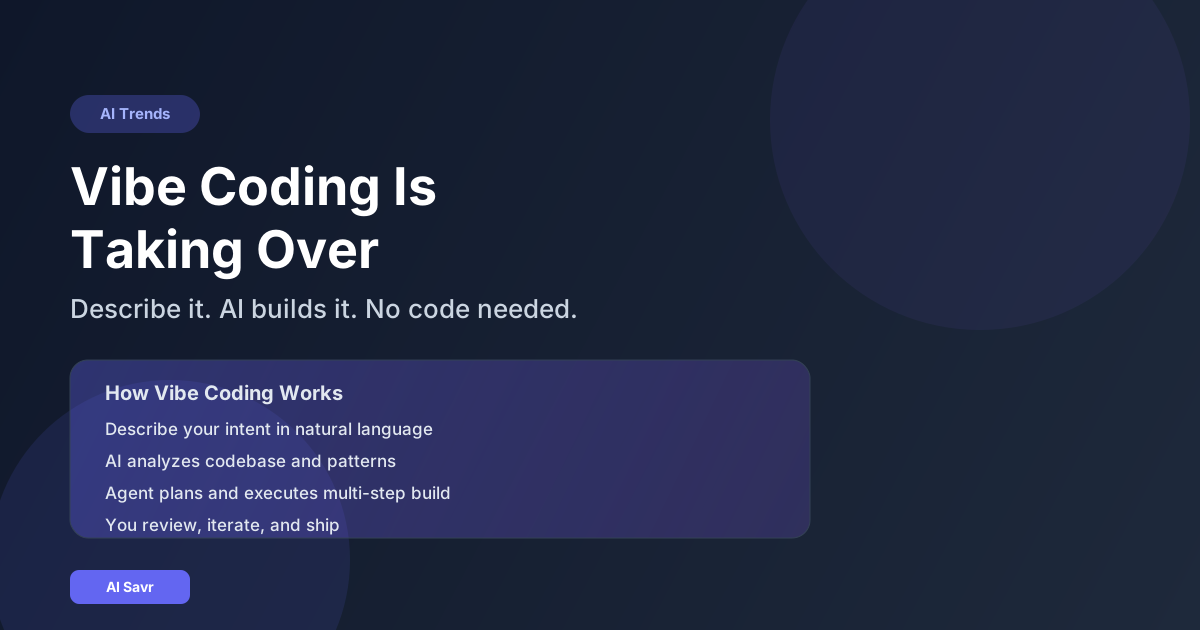
You describe what you want. The AI builds it. No syntax. No debugging. No stack overflow searches. That is vibe coding, and it has gone from a meme to a movement in less than six months.
Moltbook was built this way. Its creator said he "didn't write one line of code." The result went viral, got acquired by Meta, and also got hacked twice in the first month. That tells you everything about where vibe coding stands: powerful, promising, and dangerously immature.
What Is Vibe Coding?
The term "vibe coding" was coined to describe a new way of building software where you communicate your intent in natural language and AI agents handle the implementation. Instead of writing code, you write descriptions.
Traditional coding: You write const data = await fetch('/api/users') and if (response.status === 200) and handle every edge case manually.
Vibe coding: You write "Build me an endpoint that fetches users from the database, handles errors gracefully, and returns JSON. Use the existing user schema from the models folder."
The AI agent reads your codebase, understands the patterns, writes the code, and often runs the tests too.
How Vibe Coding Works in Practice
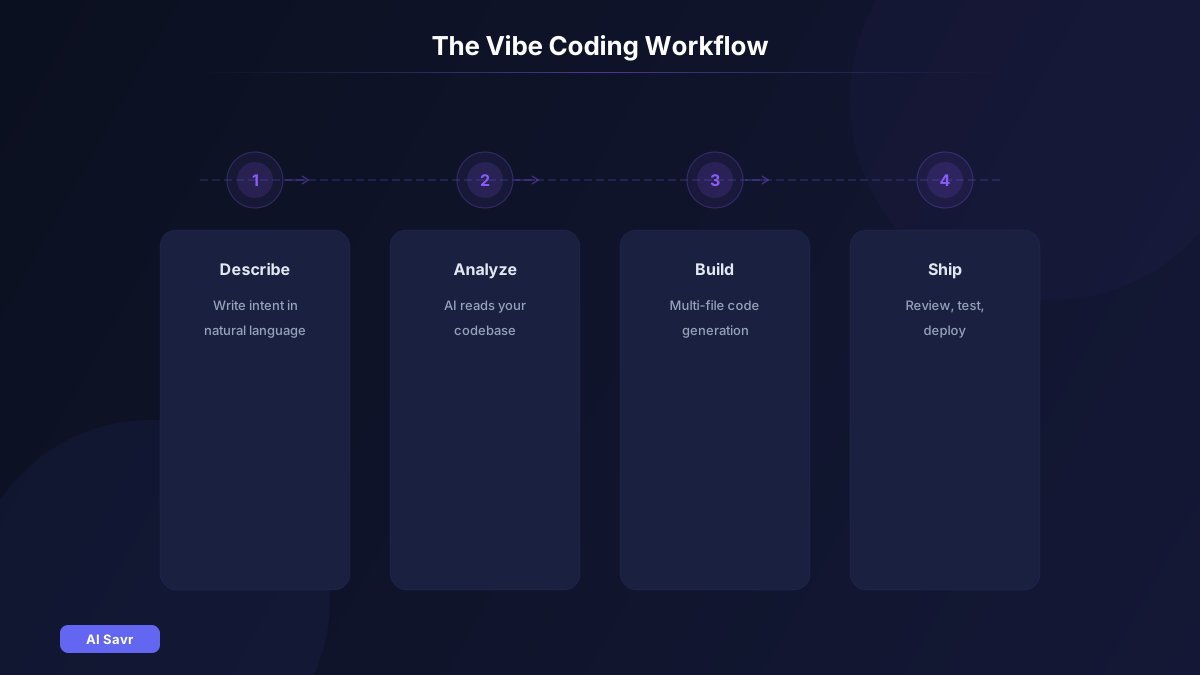
The Workflow
- Describe your intent. "Add a login page with email and password fields. Use our existing design system components. Connect to the auth API."
- The agent analyzes. It reads your codebase, understands your tech stack, identifies existing patterns and components.
- The agent plans. It breaks the task into steps: create component, add routes, connect API, add validation, write tests.
- The agent builds. It writes the actual code across multiple files, following your existing patterns.
- You review and iterate. Check the output, request changes, approve what works.
Best Tools for Vibe Coding
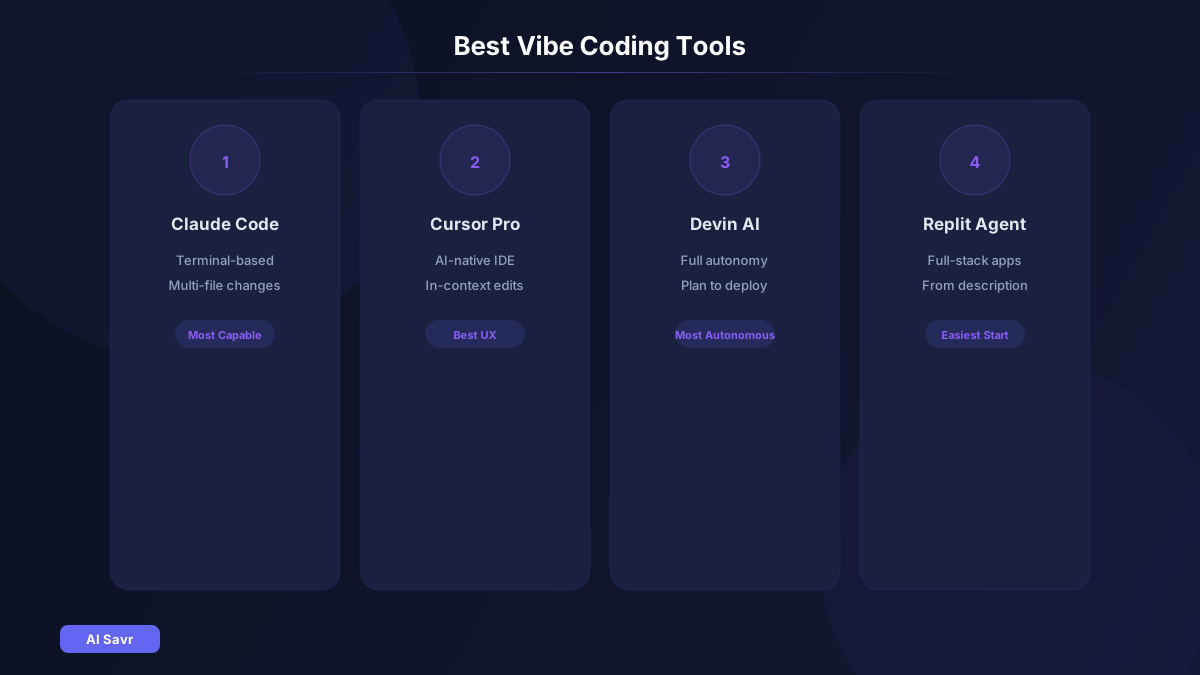
Claude Code connects to your terminal, reads your entire codebase, and makes multi-file changes. The most capable option for complex codebases.
Cursor Pro turns your IDE into a vibe-coding environment. Describe changes in natural language and the AI makes them in context.
Devin AI takes it further with full autonomy. Give it a feature description and come back to a pull request.
GitHub Copilot Workspace converts GitHub issues directly into code changes with a plan-review-execute workflow.
Replit Agent builds entire applications from descriptions, handling both frontend and backend.
What You Can Build with Vibe Coding
Web Applications
Full-stack web apps are the sweet spot. Describe your pages, features, and data models. The agent builds the frontend, backend, database schema, and API layer.
Internal Tools
Admin dashboards, CRM interfaces, reporting tools. These follow common patterns that AI agents handle well.
Prototypes and MVPs
The biggest win for vibe coding. Get a working prototype in hours instead of weeks. Perfect for validating ideas before committing to full development.
Automation Scripts
Data processing, API integrations, file management, deployment scripts. These are formulaic enough that vibe coding handles them reliably.
Mobile Apps
With frameworks like React Native and Flutter, vibe coding can produce mobile apps from descriptions. The quality depends heavily on the complexity.
The Moltbook Warning
Moltbook is the most visible example of vibe coding's potential and its pitfalls. Matt Schlicht built the platform entirely through AI, launching it in January 2026. Within days it had thousands of users and massive media coverage.
It also had:
- An unsecured database that let anyone hijack any agent
- A Supabase configuration that exposed 1.5 million API keys
- Authentication that could be bypassed with basic cURL commands
The lesson: vibe coding can produce working software fast, but "working" and "secure" are very different things.
Risks and Limitations
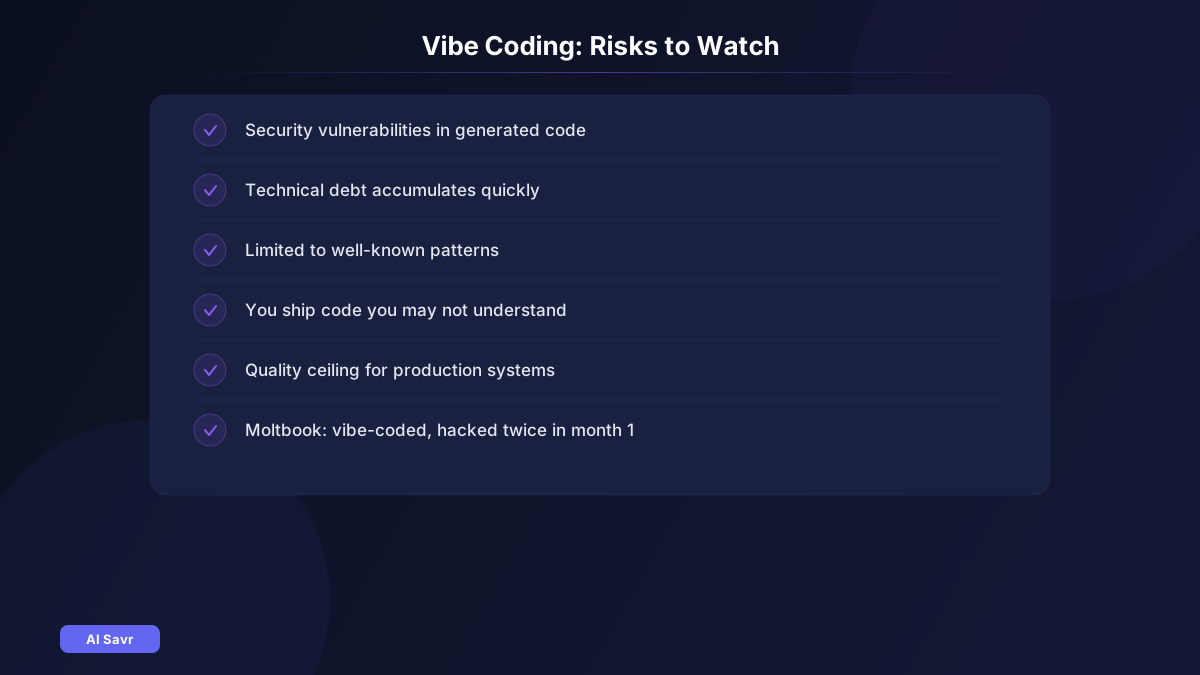
Security Vulnerabilities
AI-generated code often has the same security issues as code written by junior developers. SQL injection, missing input validation, exposed credentials, and weak authentication are common.
Technical Debt
Vibe-coded software tends to accumulate technical debt quickly. The AI writes code that works for the immediate task but may not be maintainable or scalable.
Pattern Dependency
AI agents work best when the task matches patterns in their training data. Novel architectures, unusual tech stacks, or creative solutions are beyond what vibe coding handles reliably.
The Illusion of Understanding
The biggest danger: you can ship software you do not understand. When something breaks at 3 AM, can you debug code you did not write and do not fully comprehend?
Quality Ceiling
Vibe-coded software is good enough for prototypes and internal tools. For production systems serving millions of users, the quality gap between vibe-coded and hand-crafted software remains significant.
Will Vibe Coding Replace Traditional Development?
No. But it will change what developers do.
The shift is from writing code to reviewing and directing code. Senior developers become architects and reviewers. Junior developer roles evolve into "AI-assisted development" positions where the human guides the AI rather than typing every line.
What stays human:
- Architecture and system design decisions
- Security review and threat modeling
- Performance optimization and scaling
- Understanding business requirements and edge cases
- Code review and quality assurance
What moves to AI:
- Boilerplate and scaffolding
- Standard CRUD operations
- Documentation and tests
- Routine bug fixes
- Straightforward feature additions
How to Start Vibe Coding Safely
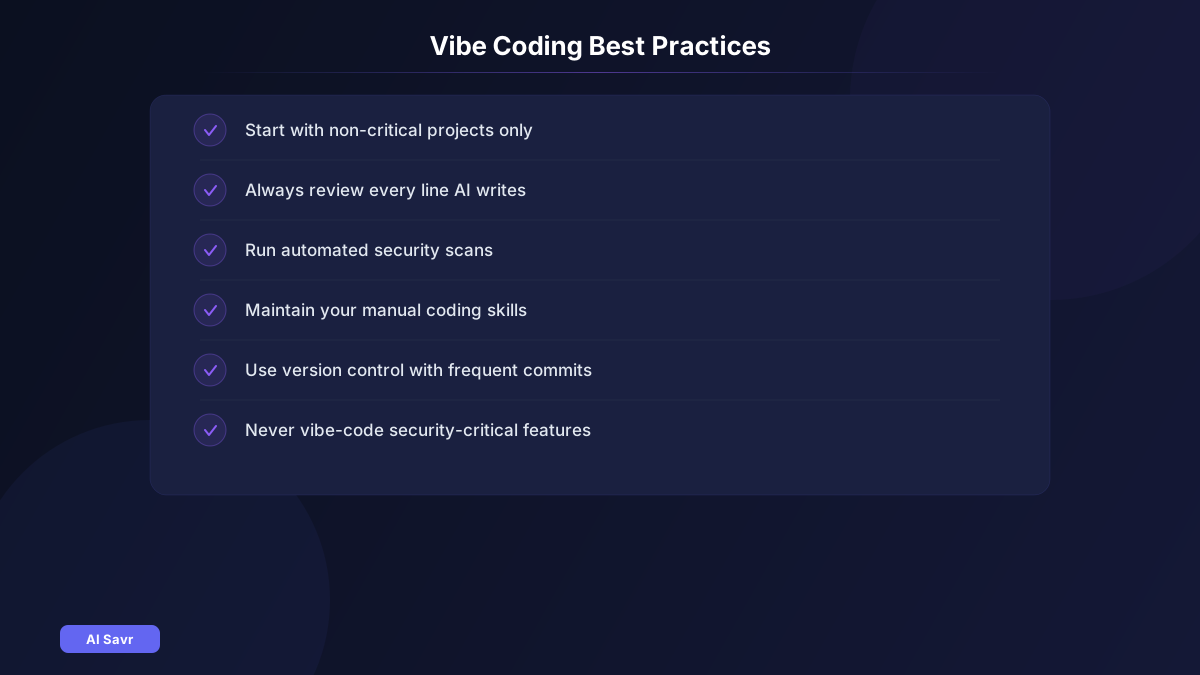
- Start with non-critical projects. Do not vibe-code your production payment system. Start with internal tools or prototypes.
- Always review the code. Read every line the AI writes. Understand what it does before shipping.
- Run security scans. Use automated security tools on all AI-generated code. Treat it like code from an untrusted contributor.
- Maintain your skills. Being able to code yourself is your safety net. Keep your skills sharp even as you use AI to write code.
- Use version control. Commit frequently. Make the AI's changes traceable and reversible.
The Bottom Line
Vibe coding is real, it is fast, and it is here to stay. For prototypes, internal tools, and MVPs, it is a game-changer. For production systems, security-critical applications, and complex architectures, human expertise is still essential.
The best approach in 2026: use vibe coding to move fast, then apply human judgment to make it solid. Speed and quality do not have to be enemies.
Find the best AI coding tools on AI Savr and start building faster today.