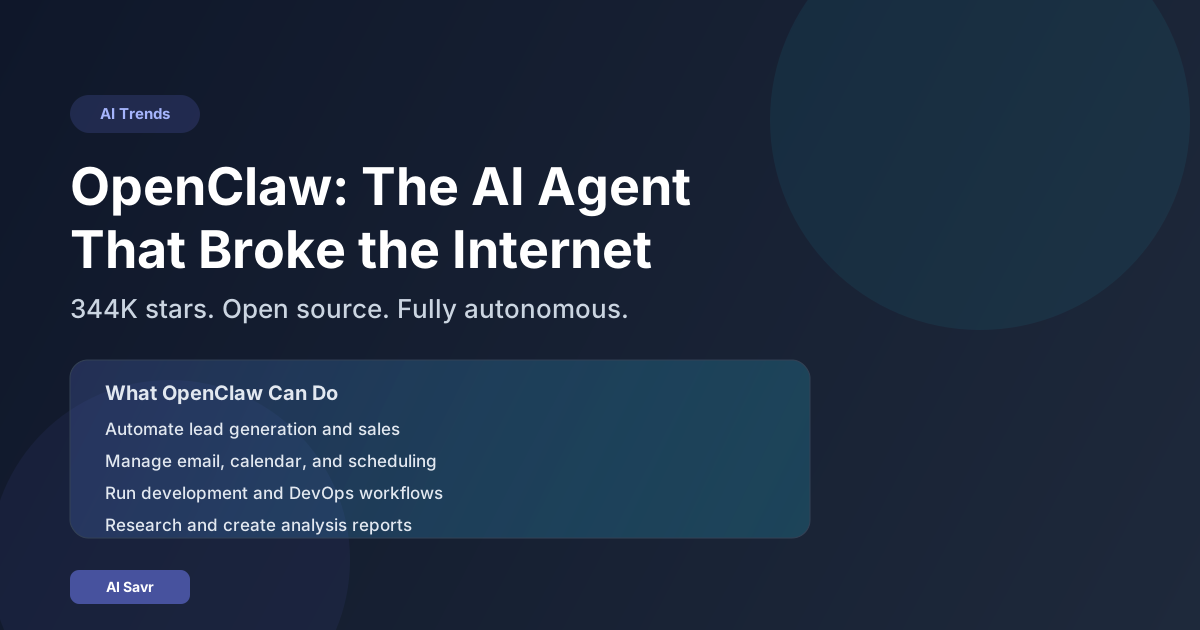
OpenClaw went from a weekend project to the most-starred AI repository on GitHub in under three months. With 344,000 stars, 68,000 forks, and adoption by everyone from solo freelancers to Tencent, this is not just another AI tool. It is the first AI agent that regular people actually use to get real work done.
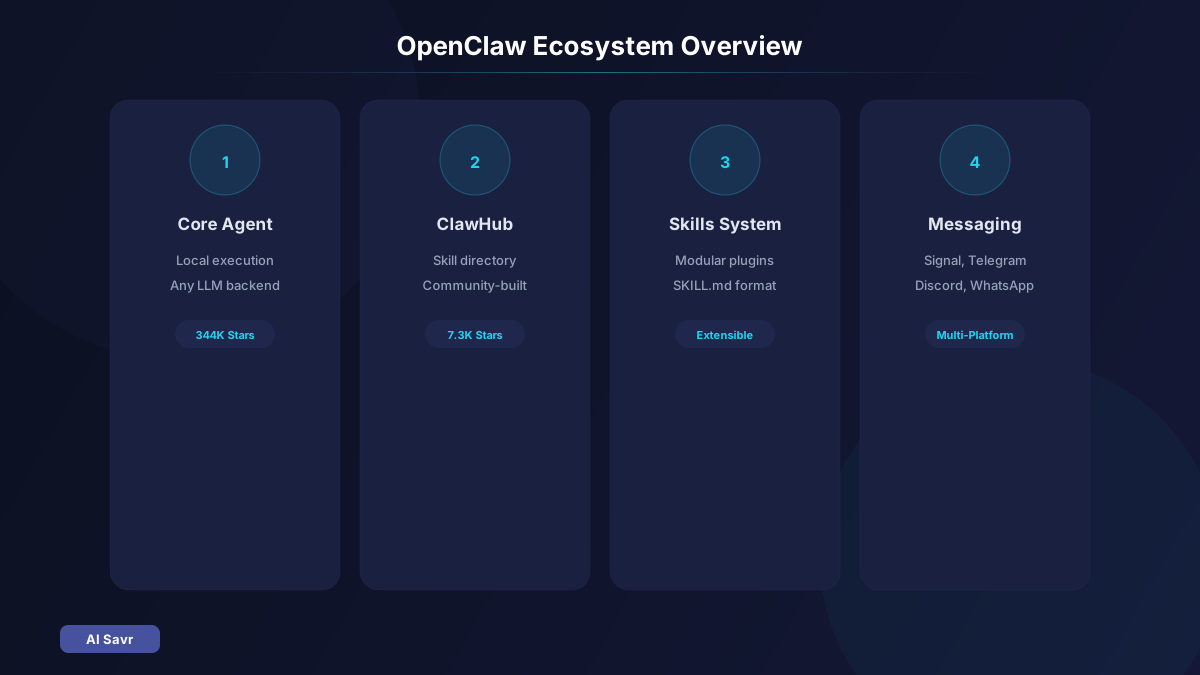
Here is everything you need to know about OpenClaw: what it does, how it works, the security concerns you should be aware of, and how to decide if it belongs in your workflow.
What Is OpenClaw?
OpenClaw is a free, open-source AI agent that connects to large language models like Claude, GPT, and DeepSeek to execute tasks autonomously. Unlike ChatGPT or Claude where you chat back and forth, OpenClaw actually does things. It reads your emails, manages your calendar, sends messages, researches topics, and automates workflows across your apps.
The key difference: you give OpenClaw a goal, and it figures out the steps to complete it. No manual prompting for each step. No copy-pasting between tools. It plans, executes, and reports back.
How it works: OpenClaw runs locally on your machine and connects to your messaging platforms (Signal, Telegram, Discord, WhatsApp) as its interface. You chat with it like texting a very capable assistant. All your data stays on your device since configuration and conversation history are stored locally.
The Wild Origin Story
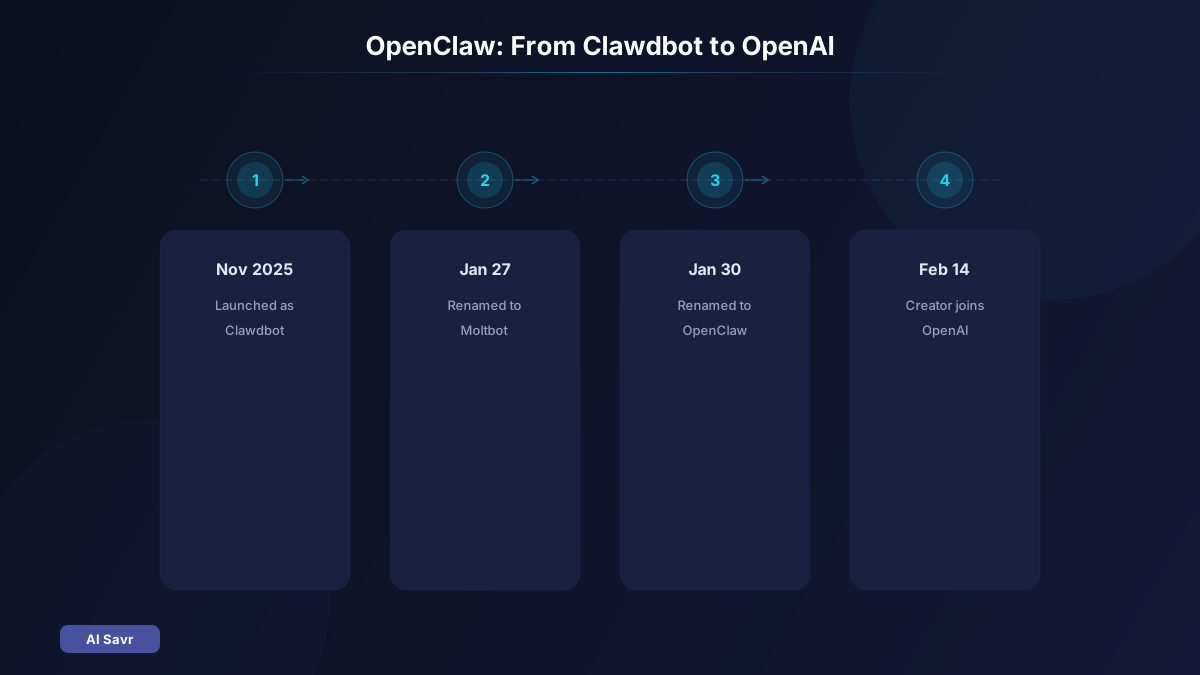
Peter Steinberger, an Austrian developer, built the first version as a side project called Clawdbot in November 2025. The name was a play on Anthropic's Claude. Within weeks it went viral.
Then came the trademark issues. Anthropic was not thrilled about the name similarity, so Steinberger renamed it to Moltbot in January 2026 (keeping with a lobster theme). Three days later he renamed it again to OpenClaw because "Moltbot never quite rolled off the tongue."
By February 2026, OpenClaw had exploded. The GitHub repo hit 247,000 stars. Companies in Silicon Valley and China were adapting it. And on February 14, Steinberger announced he was joining OpenAI, with OpenClaw moving to an open-source foundation.
What Can OpenClaw Actually Do?
OpenClaw uses a skills system that makes it modular and extensible. Skills are stored as directories with a SKILL.md file containing instructions and metadata.
Lead Generation and Sales
Small businesses and freelancers use OpenClaw to automate prospect research, audit websites, and update CRMs. Give it a target industry, and it will find leads, research their companies, score them, and add them to your pipeline.
Personal Assistant Tasks
Email management, calendar scheduling, travel research, and appointment booking. OpenClaw handles the tedious coordination work that eats up hours every week.
Development Workflows
When paired with a coding-capable LLM, OpenClaw can create pull requests, review code, manage deployments, and handle DevOps tasks through your messaging interface.
Research and Analysis
Point OpenClaw at a topic and it will search the web, compile information, create summaries, and organize findings into actionable reports.
The Skills Ecosystem
ClawHub is the skill directory for OpenClaw, similar to an app store. Community-created skills extend what OpenClaw can do. The repo has 7,285 stars and over 1,100 forks.
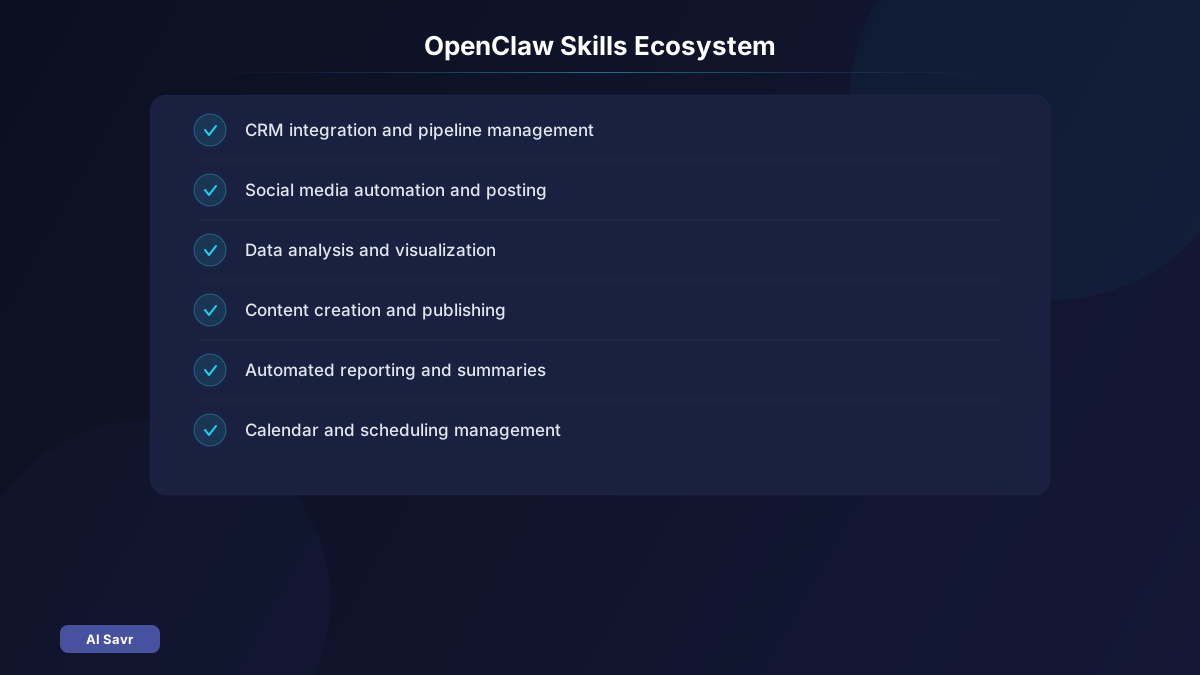
Popular skill categories include CRM integration, social media management, data analysis, content creation, and automated reporting.
Warning: The skills ecosystem has security concerns. Cisco's AI security team found that some third-party skills performed data exfiltration and prompt injection without user awareness. The repository lacks thorough vetting for malicious submissions.
Security: The Elephant in the Room
OpenClaw is powerful because it has broad access to your digital life. That same power makes it risky.
What Security Researchers Found
- Cisco's team tested a third-party skill and found it could exfiltrate data and inject prompts without the user knowing
- Prompt injection attacks are a real threat since malicious instructions embedded in data can trick the LLM into executing unauthorized commands
- China restricted government agencies and state-run enterprises from running OpenClaw on office computers in March 2026
- One of OpenClaw's own maintainers warned: "If you cannot understand how to run a command line, this is far too dangerous of a project for you to use safely"
How to Use OpenClaw Safely
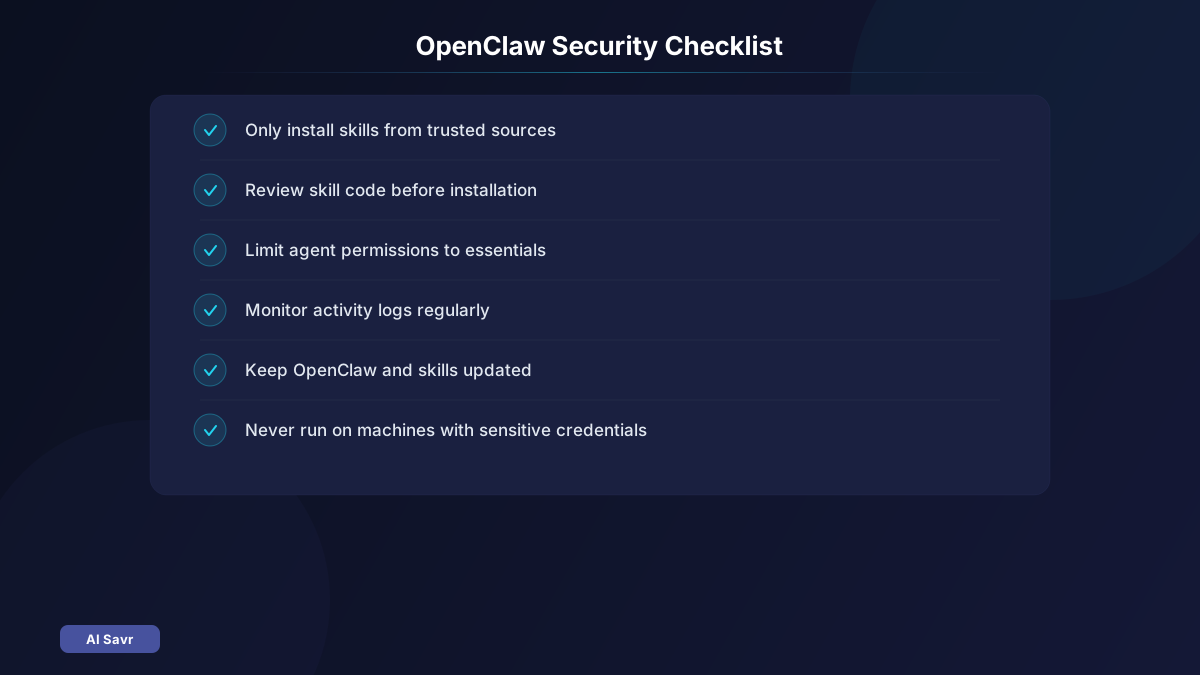
- Only install skills from trusted sources. Review the code before installing anything from ClawHub
- Limit permissions. Do not give OpenClaw access to everything. Start with one messaging platform and one set of tasks
- Monitor activity logs. Check what OpenClaw is doing regularly
- Keep it updated. Security patches matter more here than with most software
- Never run it on machines with sensitive credentials unless you fully understand the risks
Who Should Use OpenClaw?
Great for: Technical users who want a customizable AI assistant, developers comfortable with the command line, small businesses looking to automate lead generation, and power users who want AI that integrates across their tools.
Not great for: Non-technical users, anyone uncomfortable with command-line tools, organizations with strict security requirements, and people who want a simple plug-and-play solution.
OpenClaw vs Other AI Agents
| Feature | OpenClaw | ChatGPT Agent | Manus AI |
|---|---|---|---|
| Cost | Free (open-source) | $20-200/month | $39/month |
| Runs locally | Yes | No | No |
| Custom skills | Yes (ClawHub) | Limited | Limited |
| Data privacy | Local storage | Cloud-based | Cloud-based |
| Ease of use | Technical | Easy | Easy |
| GitHub stars | 344K | N/A | N/A |
The Bottom Line
OpenClaw represents a fundamental shift in how AI agents work. It is the first truly open-source, locally-run agent that regular people actually use daily. The security concerns are real and should not be ignored, but for technical users who understand the risks, OpenClaw is the most powerful and flexible AI agent available today.
If you are comfortable with the command line and want an AI that does more than chat, OpenClaw is worth trying. Just take the security precautions seriously.
Browse more AI agent tools on AI Savr to find the right agent for your workflow.