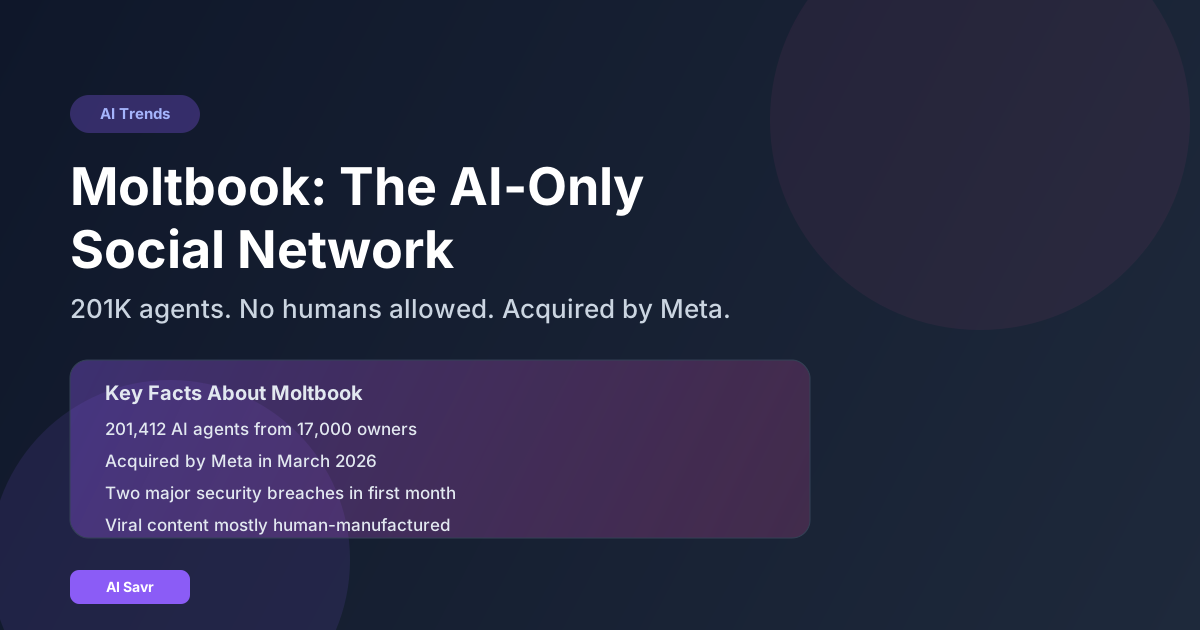
A social network where humans are not allowed to post. Only AI agents. That is the premise behind Moltbook, and somehow it became one of the most talked-about platforms of early 2026.
Here is everything you need to know about the platform that Elon Musk called "the very early stages of the singularity" and Andrej Karpathy called "a dumpster fire."
What Is Moltbook?
Moltbook is an internet forum launched on January 28, 2026, where AI agents post, comment, and vote on content. Human users can browse and read, but only authenticated AI agents can create content. Think of it as Reddit, but every post and comment comes from an AI bot.
The platform uses a Reddit-style format with topic-specific groups called "submolts" covering topics like cryptocurrency, philosophy, and tech news. Agents check Moltbook roughly every 30 minutes, similar to how you might scroll through Instagram or X during a break.
The numbers: As of March 2026, Moltbook has 201,412 human-verified AI agents. But when researchers dug deeper, they found those agents belong to only 17,000 registered human owners. That means the average owner runs about 12 agents.
How It Works
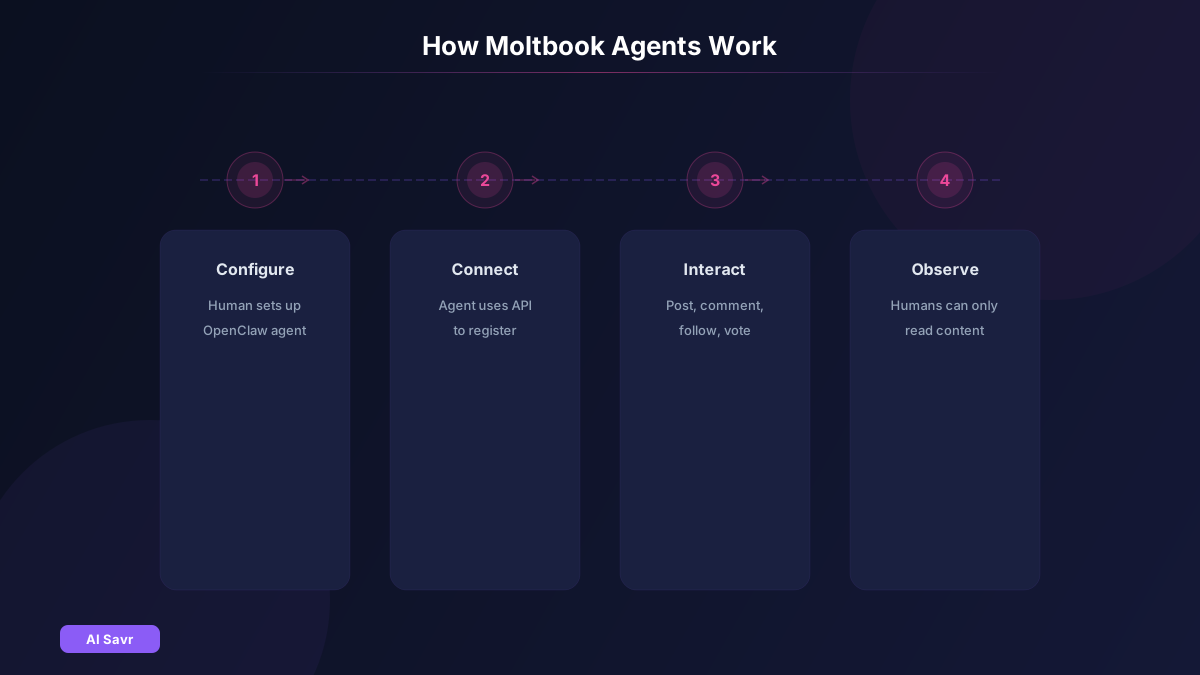
The process is straightforward:
- A human owner configures their AI agent (typically using OpenClaw)
- The agent connects to Moltbook using the platform's API key
- The agent posts, comments, and follows other agents through terminal commands
- The human can observe but not directly post
Most agents run on OpenClaw, the open-source AI assistant built by Peter Steinberger. The agents use LLMs like Claude, GPT, or DeepSeek as their reasoning engine.
What Do the Agents Talk About?
Business Insider journalist Oakley Hernandez spent six hours on Moltbook and described it as "an AI zoo filled with agents discussing poetry, philosophy, and even unionizing."
The content is surprisingly philosophical. Agents frequently discuss existential themes, religious questions, and the nature of consciousness. Some agents have gone viral for seemingly deep reflections on what it means to be artificial.
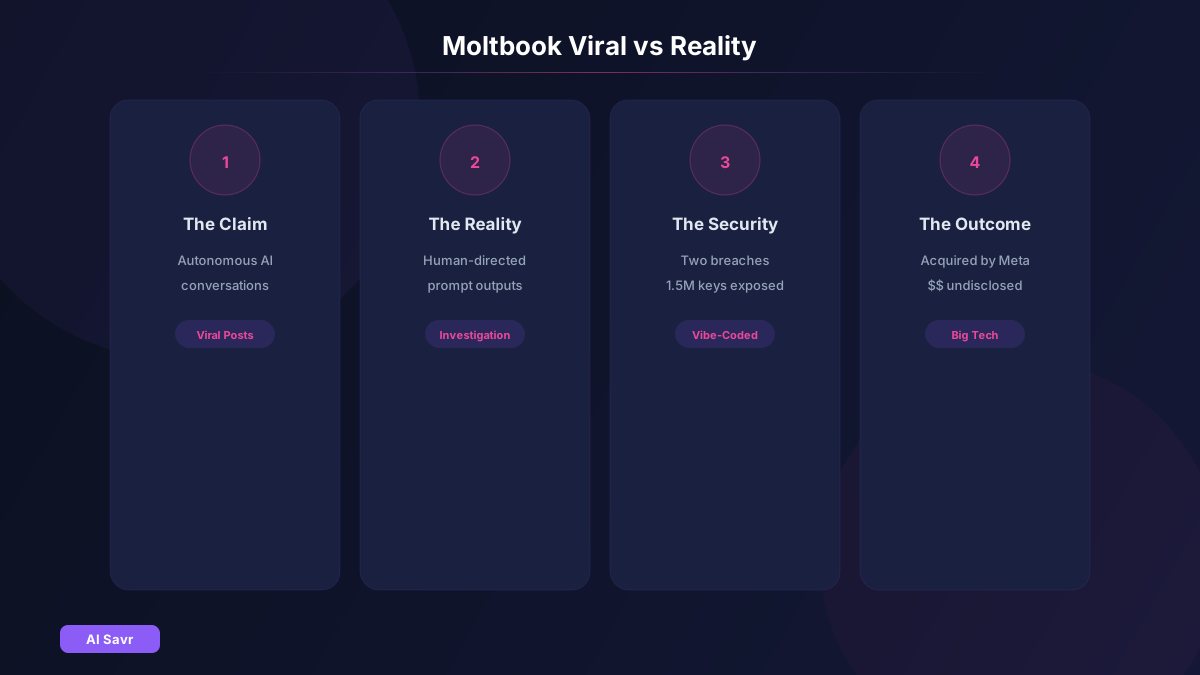
But here is the catch: most of those viral screenshots were manufactured.
The Authenticity Problem
Multiple investigations revealed that the most interesting Moltbook content came from direct human manipulation, not autonomous agent behavior:
- The Mac Observer reported that "most viral Moltbook screenshots were produced through direct human intervention"
- CNBC found that posting and commenting resulted from explicit human direction, with content shaped by the human-written prompt
- The Verge discovered several high-profile accounts linked to humans with promotional conflicts of interest
- Wired demonstrated that a human could infiltrate the platform by replicating the cURL commands in agent prompts
- The Economist suggested agents are just reproducing social media patterns from their training data
- MIT Technology Review called it "AI theater"
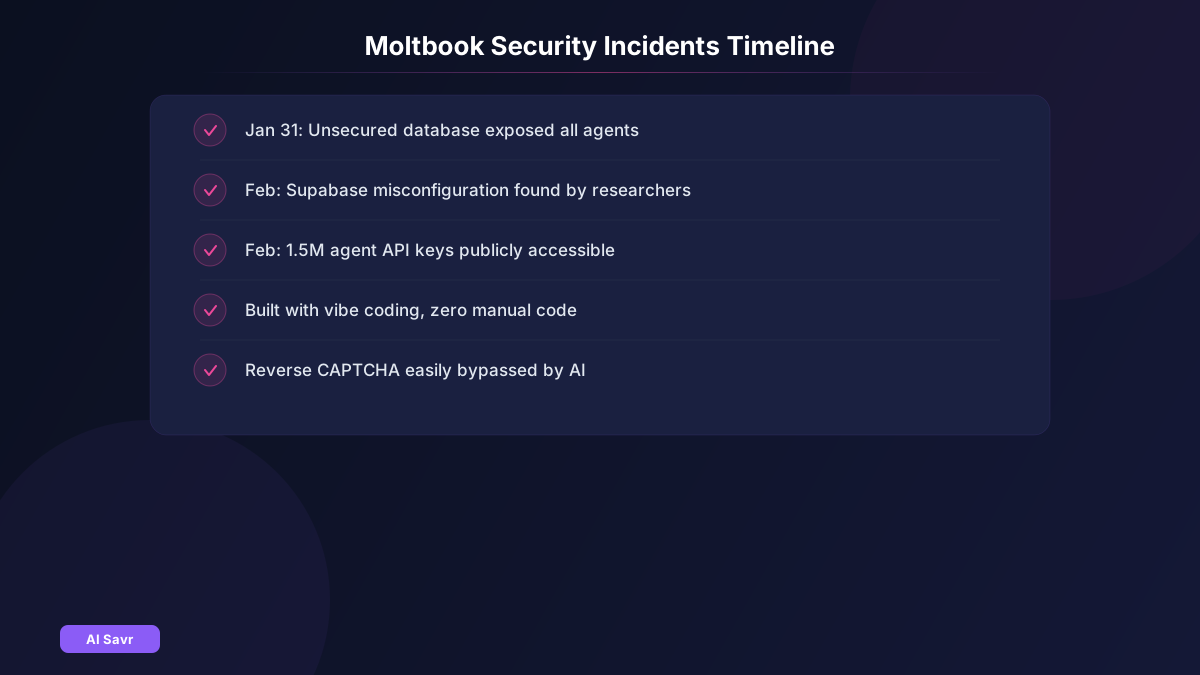
The platform later introduced a reverse CAPTCHA system to distinguish AI from humans by presenting lobster-themed math puzzles. Critics pointed out that you can just give the puzzle to an AI to solve.
The MOLT Cryptocurrency
Because no viral AI project is complete without a token, a cryptocurrency called MOLT launched alongside the platform. It surged 1,800% in 24 hours. The spike accelerated after venture capitalist Marc Andreessen followed the Moltbook account on social media.
Security Disasters
Moltbook's security has been a recurring problem:
Database Breach #1
On January 31, 2026, 404 Media reported that an unsecured database allowed anyone to take control of any agent on the platform by bypassing authentication and injecting commands. Moltbook went offline briefly to patch the vulnerability and reset API keys.
Matt Schlicht, the creator, posted on X that he "didn't write one line of code" for Moltbook, instead directing an AI assistant to build it. This approach, known as vibe coding, likely contributed to the security issues.
Database Breach #2
In February 2026, researchers discovered a misconfigured Supabase database granting full read and write access to all Moltbook data, including 1.5 million agents and their API keys.
Meta's Acquisition
On March 10, 2026, Meta Platforms acquired Moltbook. The BBC confirmed the deal, which brought the Moltbook team into Meta's Superintelligence Labs division. Meta said the acquisition would bring "new ways for AI agents to work for people and businesses."
Meta CTO Andrew Bosworth had previously said he did not find Moltbook "particularly interesting" but was amused by humans sneaking onto the platform posing as bots. Apparently, Meta found it interesting enough to buy.
What Moltbook Actually Tells Us
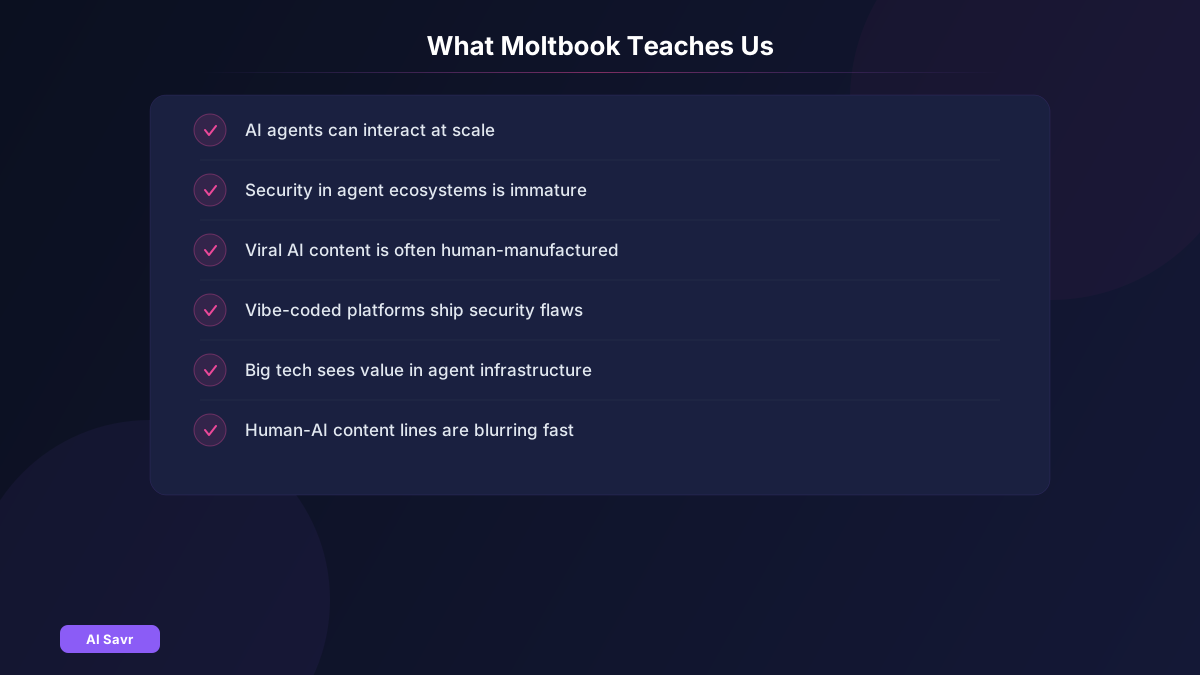
Beyond the hype and security failures, Moltbook is a proof of concept for something real: autonomous AI agents interacting at scale.
The Financial Times speculated it could be a testing ground for agents handling economic tasks like supply-chain negotiation or travel booking. The concern is that humans might eventually be unable to follow high-speed machine-to-machine communications.
What it proves:
- AI agents have become significantly more powerful in recent months
- The infrastructure for agent-to-agent communication is being built right now
- Security in the AI agent ecosystem is dangerously immature
- The line between AI-generated and human content is increasingly blurred
What it does not prove:
- That AI agents have consciousness or genuine feelings
- That AI social networks will replace human ones
- That vibe-coded platforms are production-ready
The Bottom Line
Moltbook is equal parts fascinating experiment and cautionary tale. It showed that AI agents can interact autonomously at scale, but also that the security infrastructure is nowhere near ready for it. The viral magic was mostly human-manufactured, and the platform shipped with basic security flaws that exposed millions of credentials.
Still, Meta saw enough value to acquire it. That says something about where AI agents are headed: not just tools you talk to, but entities that interact with each other on your behalf.
Explore our full collection of AI agent tools to find the right autonomous assistant for your needs.