
SEO in 2026 is not about keyword stuffing or buying links. It is about creating genuinely useful content, faster and more strategically than your competition. AI makes that possible.

Here is how to use AI at every stage of your SEO workflow.
AI Keyword Research
Traditional keyword tools give you data. AI gives you strategy.
With [ChatGPT](/tools/chatgpt/): "I run a [type of business] targeting [audience]. Generate 50 long-tail keywords grouped by search intent: informational, commercial, and transactional."
With [Perplexity](/tools/perplexity/): Use Perplexity to find what real people are asking about your topic. These questions become your content topics.
Best keyword strategy:
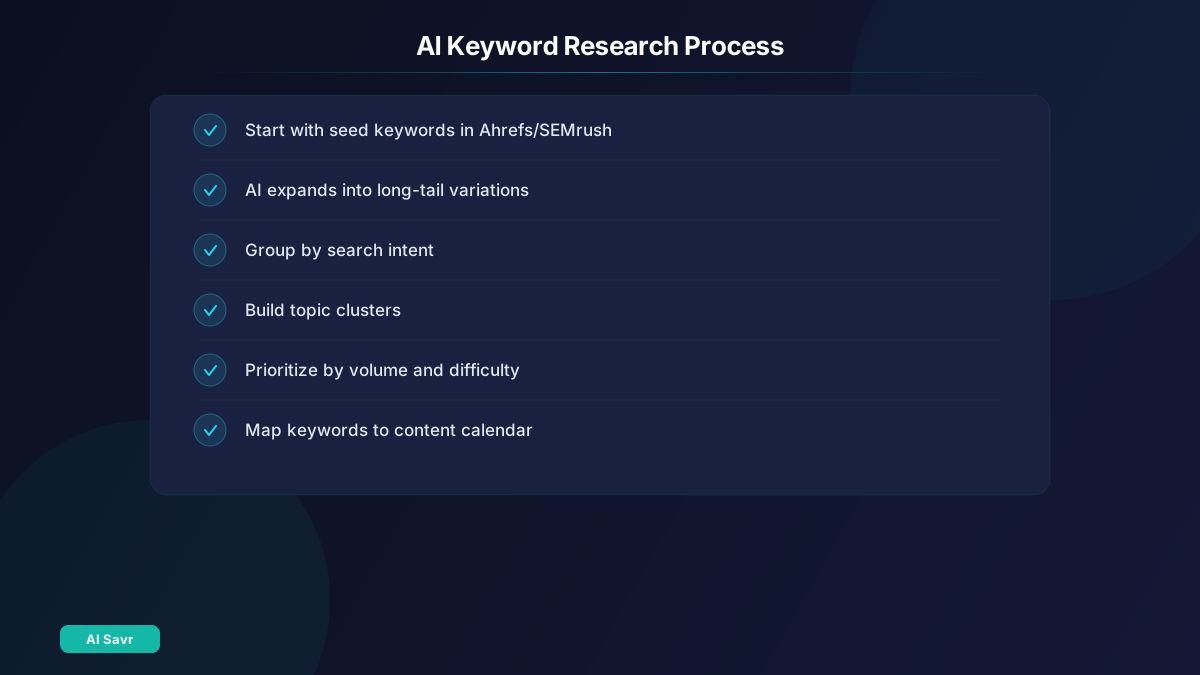
- Start with broad seed keywords in a traditional tool (Ahrefs, SEMrush)
- Use AI to expand into long-tail variations and question-based queries
- Group keywords by intent and topic clusters
- Prioritize based on search volume, difficulty, and business relevance
AI Content Creation for SEO
The ranking factor that matters most is still content quality. AI helps you write better content faster.
Content outline with AI: Claude excels at creating comprehensive outlines: "Create a detailed outline for an article about [topic]. Include H2 and H3 headings, key points to cover under each section, and questions to answer. Target keyword: [keyword]."
Writing the article:
- Use AI for the first draft structure, then add your expertise and unique insights
- Include original data, case studies, and personal experience that AI cannot generate
- Grammarly for readability and clarity optimization
- Jasper for SEO-specific writing features with keyword tracking
Important: Google's helpful content update rewards content with genuine expertise. AI-only content without human insight will not rank well.
Technical SEO with AI
ChatGPT handles technical SEO tasks efficiently:
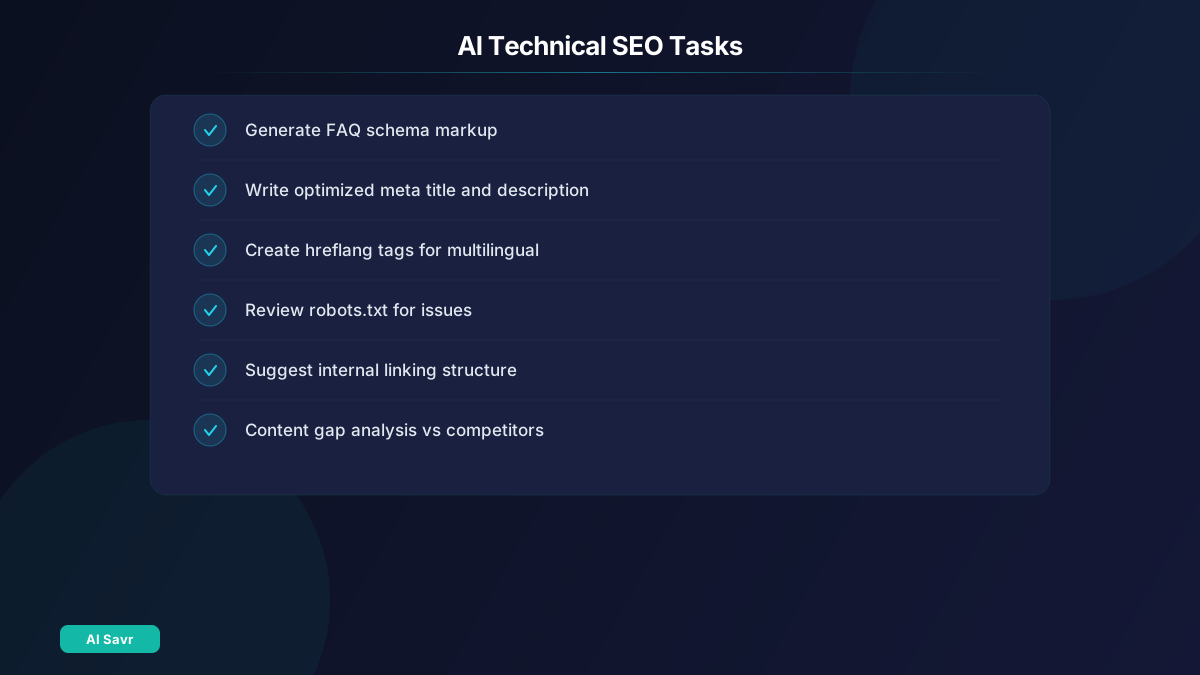
- Schema markup: "Generate FAQ schema markup for these questions and answers"
- Meta tags: "Write an SEO-optimized title tag and meta description for this article. Target keyword: [keyword]. Keep title under 60 characters and description under 155."
- hreflang tags: "Generate hreflang tags for a page available in English, Spanish, and French"
- Robots.txt review: "Review this robots.txt file and identify potential SEO issues"
- Site structure: "Suggest an optimal URL structure for an ecommerce site selling [products]"
Content Optimization
After writing, use AI to optimize:
- Internal linking: Ask ChatGPT to suggest internal links based on your site structure
- Featured snippet optimization: Reformat key sections to match snippet formats (paragraphs, lists, tables)
- Content gaps: "Compare my article outline to the top 5 ranking articles for [keyword]. What topics am I missing?"
- Readability: Target 8th grade reading level for most content. AI can simplify complex passages.
- Content refresh: "Update this article from 2024 with current information and trends for 2026"
Link Building with AI
AI streamlines outreach:
- Generate personalized outreach emails at scale with Copy.ai
- Find broken link building opportunities with AI-powered research
- Create linkable assets (original research, tools, guides) that attract natural links
- Write guest post pitches tailored to each publication's style
SEO Tools with AI Features
| Tool | AI Feature | Best For |
|---|---|---|
| Surfer SEO | Content scoring and optimization | On-page SEO |
| Clearscope | Content intelligence | Enterprise content |
| Frase | AI content briefs | Content planning |
| SEMrush | AI Writing Assistant | All-in-one SEO |
| Ahrefs | AI content analysis | Link building, research |
Common AI SEO Mistakes
- Publishing AI content without adding human expertise
- Over-optimizing for keywords instead of reader value
- Ignoring search intent in favor of keyword volume
- Not fact-checking AI-generated statistics and claims
- Duplicating content structure across multiple pages
Your AI SEO Action Plan
- Audit your existing content with AI (identify gaps, outdated info, weak pages)
- Build a keyword strategy grouped by topic clusters
- Create content outlines with AI, write with human expertise
- Optimize technical elements (meta tags, schema, internal links)
- Set up monthly content refresh cycles
- Track rankings and adjust strategy quarterly
Related Resources
The Bottom Line
AI does not replace SEO expertise. It amplifies it. Use AI for keyword research, content structure, technical tasks, and optimization. But the content that ranks is content with genuine expertise, original insights, and real value. AI helps you create that content faster and more strategically.