AI image generation has exploded. In 2022, generating a decent AI image felt like magic. In 2026, the problem isn't whether AI can make good images. It's which tool makes the best ones for your specific needs.
Midjourney, DALL-E 3, Flux, Stable Diffusion, and Ideogram are the five leading options right now. They all generate impressive images, but they excel at very different things. Midjourney dominates aesthetics. DALL-E 3 wins on ease of use. Flux offers incredible value. Stable Diffusion gives you total control. And Ideogram crushes text rendering.
This guide compares all five on the things that actually matter: image quality, speed, pricing, text accuracy, ease of use, and real-world use cases.
Quick Verdict
Before we go deep, here's the short version:
- Best overall quality: Midjourney v7
- Easiest to use: DALL-E 3 (via ChatGPT)
- Best free option: Ideogram 3
- Best for text in images: Ideogram 3
- Best for developers: Flux (open source)
- Most customizable: Stable Diffusion (local install)
- Best value for money: Flux + Ideogram (both free tiers)
Now let's break down why.
Head-to-Head Comparison
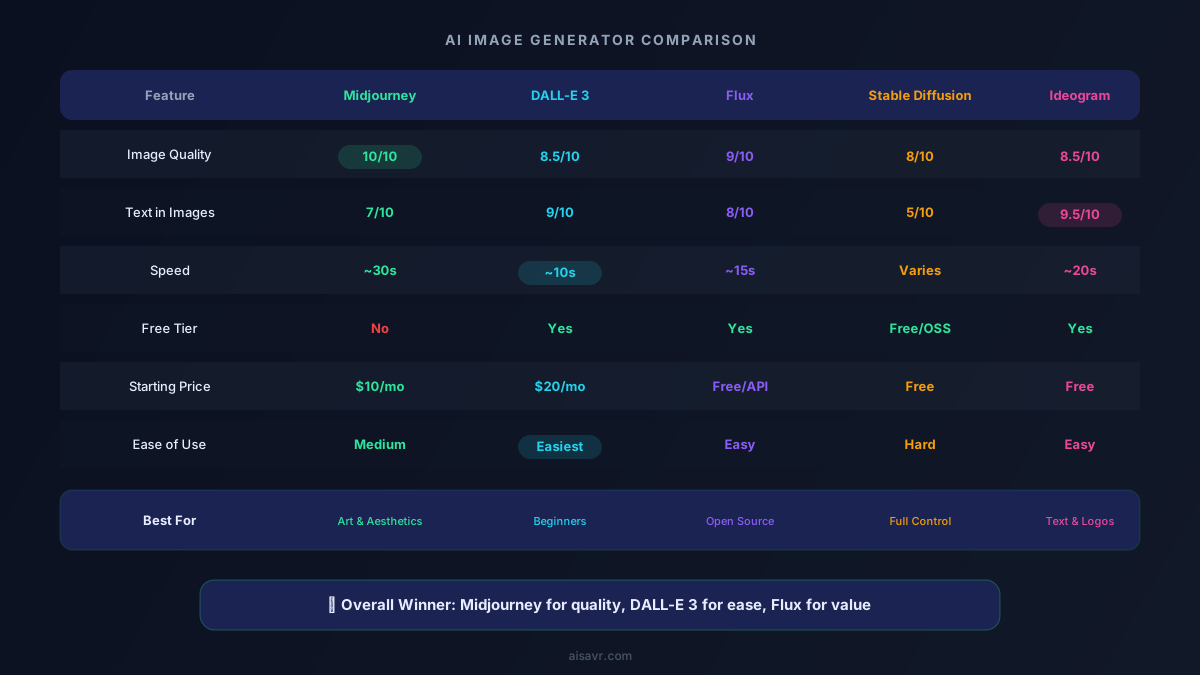
Image Quality
Midjourney v7
Midjourney's latest model produces the most visually stunning images of any AI generator. Portraits look real. Landscapes feel cinematic. The lighting, texture, and composition are consistently excellent.
Where it really shines is the "artistic intelligence." Midjourney seems to understand what makes an image look good, not just accurate. It adds dramatic lighting, interesting angles, and professional composition even when you don't specifically ask for it.
Rating: 10/10 for pure visual quality.
DALL-E 3
DALL-E 3, accessed through ChatGPT, produces clean and accurate images. It follows prompts more literally than Midjourney, which means you get exactly what you describe. The downside is that images can feel a bit "safe" or stock-photo-like compared to Midjourney's artistic flair.
The biggest strength of DALL-E 3 is prompt understanding. You can write a paragraph describing a complex scene, and it'll render most of the details correctly. It's also the best at understanding spatial relationships ("a cat sitting on top of a blue car next to a tree").
Rating: 8.5/10 for quality.
Flux
Flux, from Black Forest Labs (the team behind Stable Diffusion), has quickly become a serious contender. The Pro model produces images that rival Midjourney in many categories, especially photorealistic content. The Schnell (fast) model is free and still produces impressive results.
Flux's architecture handles fine details well: hair, fabric textures, and reflections look natural. It's particularly strong at generating realistic human faces without the "uncanny valley" effect.
Rating: 9/10 for quality.
Stable Diffusion (SDXL / SD3)
Stable Diffusion's latest models (SDXL and SD3) are capable but require more effort. Out of the box, results are decent but not as polished as Midjourney or Flux. The real power comes from fine-tuning with LoRA models, custom checkpoints, and ComfyUI workflows.
If you're willing to invest time in setup and configuration, Stable Diffusion can produce stunning results. But the default experience is rougher than the alternatives.
Rating: 8/10 out of the box, 9.5/10 with custom models.
Ideogram 3
Ideogram focuses on a different strength: generating images that contain accurate text. For general image quality, it's good but not class-leading. Images tend to have a slightly "designed" look rather than photorealistic.
Where Ideogram absolutely dominates is any image involving typography: posters, logos, signs, social media graphics. No other tool comes close for text accuracy.
Rating: 8.5/10 for general images, 10/10 for text-heavy graphics.
Text Rendering
This is where the tools diverge dramatically.
| Tool | Text Accuracy | Example Use |
|---|---|---|
| Ideogram 3 | 9.5/10, Nearly perfect | Logos, posters, social graphics |
| DALL-E 3 | 9/10, Very good | Cards, simple text overlays |
| Flux | 8/10, Good | Signs, basic text |
| Midjourney v7 | 7/10, Improved but inconsistent | Short text only |
| Stable Diffusion | 5/10, Unreliable | Not recommended for text |
If your images need accurate text, Ideogram or DALL-E 3 are your only reliable options. Midjourney has improved significantly but still struggles with longer text or unusual fonts.
Speed
DALL-E 3: ~10 seconds via ChatGPT. The fastest mainstream option.
Flux Schnell: ~5-8 seconds. The "schnell" (fast) model lives up to its name.
Ideogram: ~15-20 seconds. Moderate speed.
Midjourney: ~30-60 seconds for standard quality, longer for upscales.
Stable Diffusion: Varies wildly. On a good GPU (RTX 4090), 5-15 seconds. On a cloud service, 10-30 seconds. On an older GPU, several minutes.
For quick iterations and brainstorming, DALL-E 3 and Flux Schnell are the clear winners.
Pricing Breakdown
Midjourney
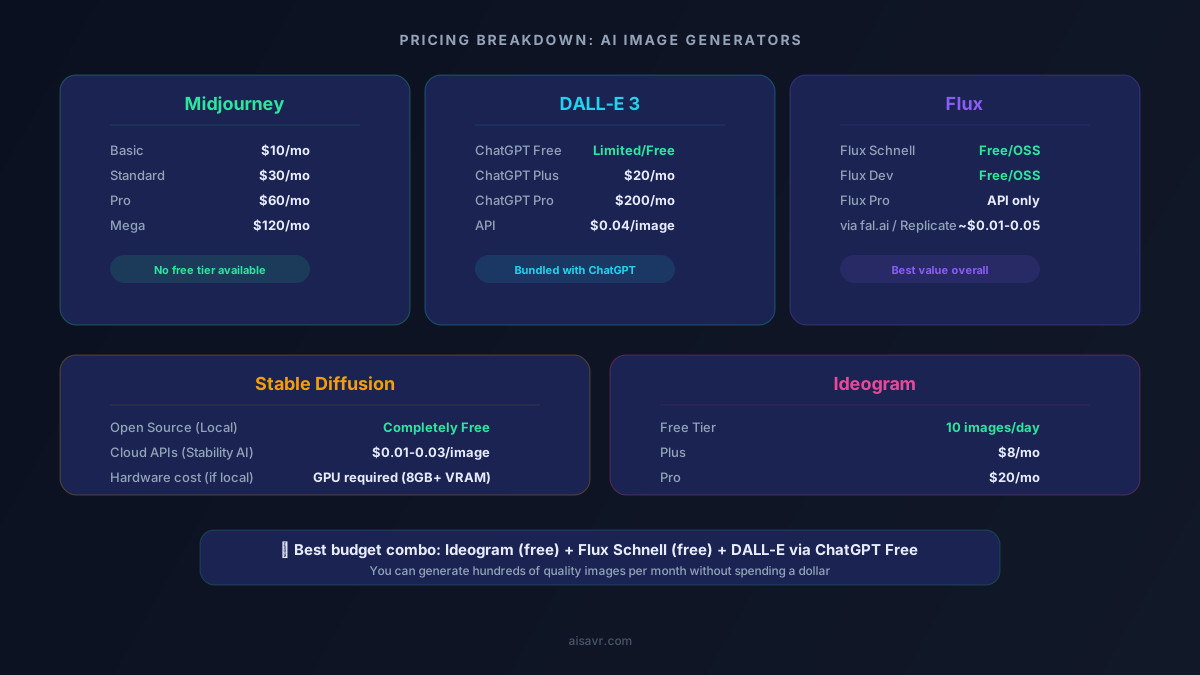
- Basic: $10/month (~200 images)
- Standard: $30/month (~900 images)
- Pro: $60/month (unlimited relaxed + 1800 fast)
- No free tier
DALL-E 3
- Free via ChatGPT (limited daily generations)
- ChatGPT Plus: $20/month (generous limits)
- API: ~$0.04 per image (1024x1024)
Flux
- Schnell model: Free and open source
- Dev model: Free for non-commercial use
- Pro via API (fal.ai, Replicate): ~$0.01-0.05 per image
Stable Diffusion
- Completely free (open source, runs locally)
- Cloud APIs: ~$0.01-0.03 per image
- Requires GPU hardware for local use (8GB+ VRAM)
Ideogram
- Free: 10 images/day
- Plus: $8/month
- Pro: $20/month
Best budget strategy: Use Ideogram (free) for graphics with text, Flux Schnell (free) for photos, and DALL-E 3 via ChatGPT Free for quick generations. Total cost: $0.
Use Case Recommendations
Realistic Photography and Portraits
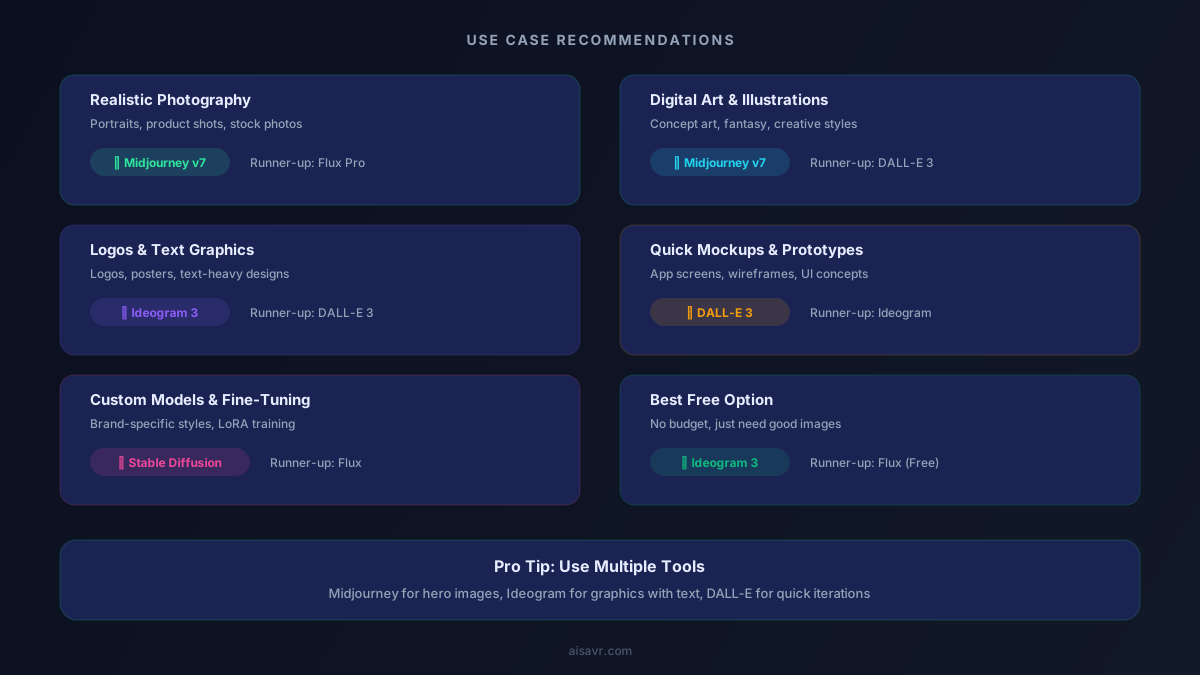
Winner: Midjourney v7. Nothing else produces portraits and product shots at this quality level. Runner-up: Flux Pro.
Digital Art and Illustrations
Winner: Midjourney v7. Its artistic style and composition intelligence make it the go-to for concept art, fantasy, and creative work. Runner-up: DALL-E 3.
Logos, Posters, and Graphics with Text
Winner: Ideogram 3. Text rendering accuracy is unmatched. If your image needs words, Ideogram is the answer. Runner-up: DALL-E 3.
Quick Mockups and Prototypes
Winner: DALL-E 3. The speed and ease of typing a description into ChatGPT make it perfect for rapid iteration. Runner-up: Ideogram.
Custom Models and Brand-Specific Styles
Winner: Stable Diffusion. The ability to train LoRA models and use custom checkpoints gives total creative control. Runner-up: Flux (also supports fine-tuning).
Best Free Option
Winner: Ideogram 3. Ten free images per day with excellent quality. Runner-up: Flux Schnell (unlimited, open source).
Prompt Quality Comparison
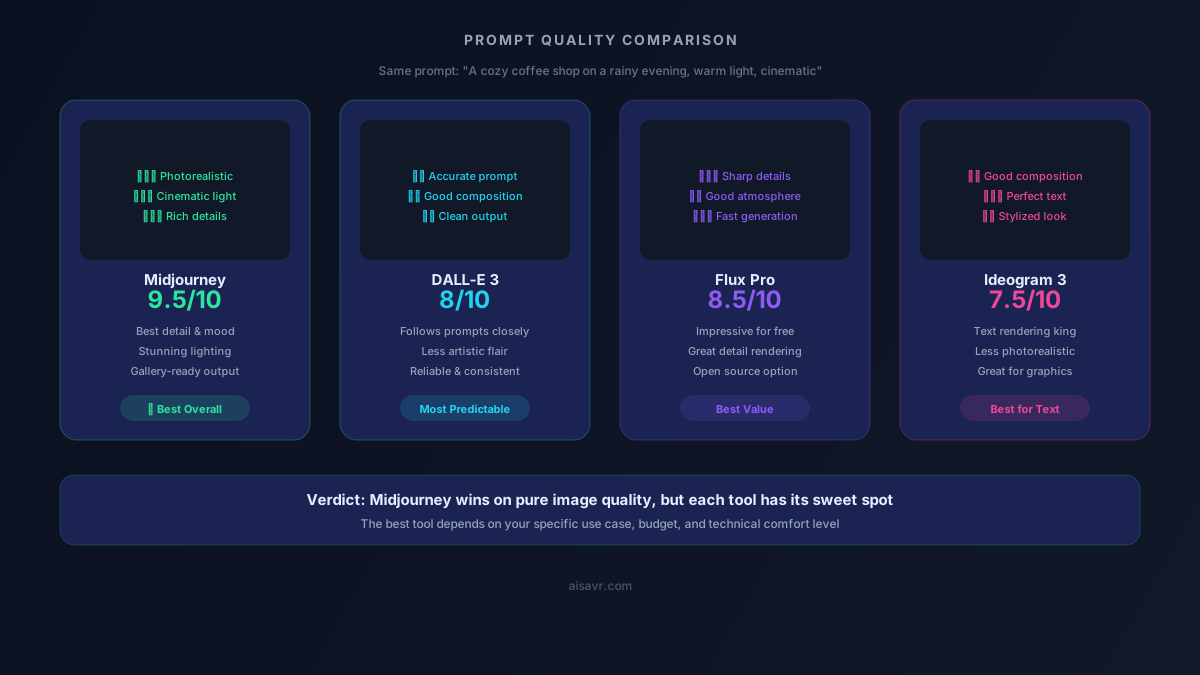
To test fairly, I used the same prompt across all five tools: "A cozy coffee shop on a rainy evening, warm golden light spilling from the windows, cinematic composition."
Midjourney produced the most atmospheric result with dramatic lighting and rich detail. It felt like a frame from a movie.
DALL-E 3 created a clean, accurate scene that matched the description well. Good composition, but lacked the mood and drama of Midjourney.
Flux Pro delivered sharp details and good atmosphere. The result was between Midjourney and DALL-E 3 in terms of artistic quality.
Stable Diffusion (SDXL default) produced a decent image but needed negative prompts and model tweaking to reach the quality of the others.
Ideogram created a stylized, design-friendly image. Good composition but clearly not optimized for photorealistic scenes.
What Each Tool Does Poorly
Every tool has weaknesses. Here's what to watch out for:
Midjourney: Hands and fingers can still be inconsistent. Text is hit-or-miss. No API access for automation. Requires Discord (or the newer web app).
DALL-E 3: Heavy content restrictions can block creative prompts. Images sometimes look "stock photo" quality. Limited style control compared to Midjourney.
Flux: Less artistic flair than Midjourney. The free Schnell model sacrifices some quality for speed. Limited to API access for Pro model.
Stable Diffusion: Steep learning curve. Default models need LoRA additions for best results. Requires technical setup and GPU hardware for local use.
Ideogram: Photorealism lags behind Midjourney and Flux. Some prompts generate a "designed" rather than "photographed" look. Less community support than competitors.
Can You Use Multiple Tools Together?
Yes, and you should. The smartest approach is combining tools:
- Midjourney for hero images, featured photos, and high-impact visuals.
- Ideogram for any graphic that needs text: social posts, infographics, logos.
- DALL-E 3 for quick iterations and brainstorming through ChatGPT.
- Flux for high-volume generation where budget matters.
- Stable Diffusion for custom workflows, batch processing, and brand-specific styles.
A common creator workflow: brainstorm with DALL-E 3, create the final version in Midjourney, add text overlays with Ideogram, and use Stable Diffusion for variations and batch processing.
How to Choose
Ask yourself three questions:
1. What's my budget?
- $0: Ideogram + Flux Schnell + DALL-E via ChatGPT Free
- $10-20/month: Midjourney Basic or ChatGPT Plus
- $30+/month: Midjourney Standard + Ideogram Plus
2. What type of images do I need?
- Photorealistic: Midjourney or Flux
- Graphics with text: Ideogram
- Quick mockups: DALL-E 3
- Full control: Stable Diffusion
3. How technical am I?
- Beginner: DALL-E 3 (simplest interface)
- Intermediate: Midjourney or Ideogram
- Advanced: Stable Diffusion or Flux (self-hosted)
The Bottom Line
There's no single "best" AI image generator in 2026. Midjourney produces the most beautiful images. DALL-E 3 is the easiest to use. Ideogram handles text perfectly. Flux offers the best value. Stable Diffusion gives complete control.
The best approach for most creators: start with DALL-E 3 through ChatGPT (free), add Ideogram (free) for graphics, and upgrade to Midjourney ($10/month) when you need premium quality.
Stop trying to find the one perfect tool. Use the right tool for each job.